Welcome to our introduction to the history of London. Whenever you start exploring a new city or country, it is good to start with the basics. Whether you are interested in history, religion or culture… Without a solid base, we won’t get very far. The city is a hodgepodge of traces that date back to the Roman, the Medieval and the Modern. So we will start you off by walking you through five key moments that made London the city it is today!
It is not the walls that make the city, but the people who live within them. The walls of London may be battered, but the spirit of the Londoner stands resolute and undismayed.
King George VI, radio address on 23 September 1940
On this page…
The Claudian Conquest (43 CE onwards)
The Romans
Before there was London there was Londinium. (Is it cheating to start off this list right away with not one, but two military campaigns by the Romans?)
Unlike with most Roman cities, the invaders did not build the capital of their British province over a native settlement. They built a new port in the middle of the First Century CE at a low point of the River Thames between Cornhill and Ludgate Hill. The Romans would stay here until the turn of the Fourth and Fifth Century. By the end of the Fifth Century, Londinium was deserted. It would remain that way for a very long time…
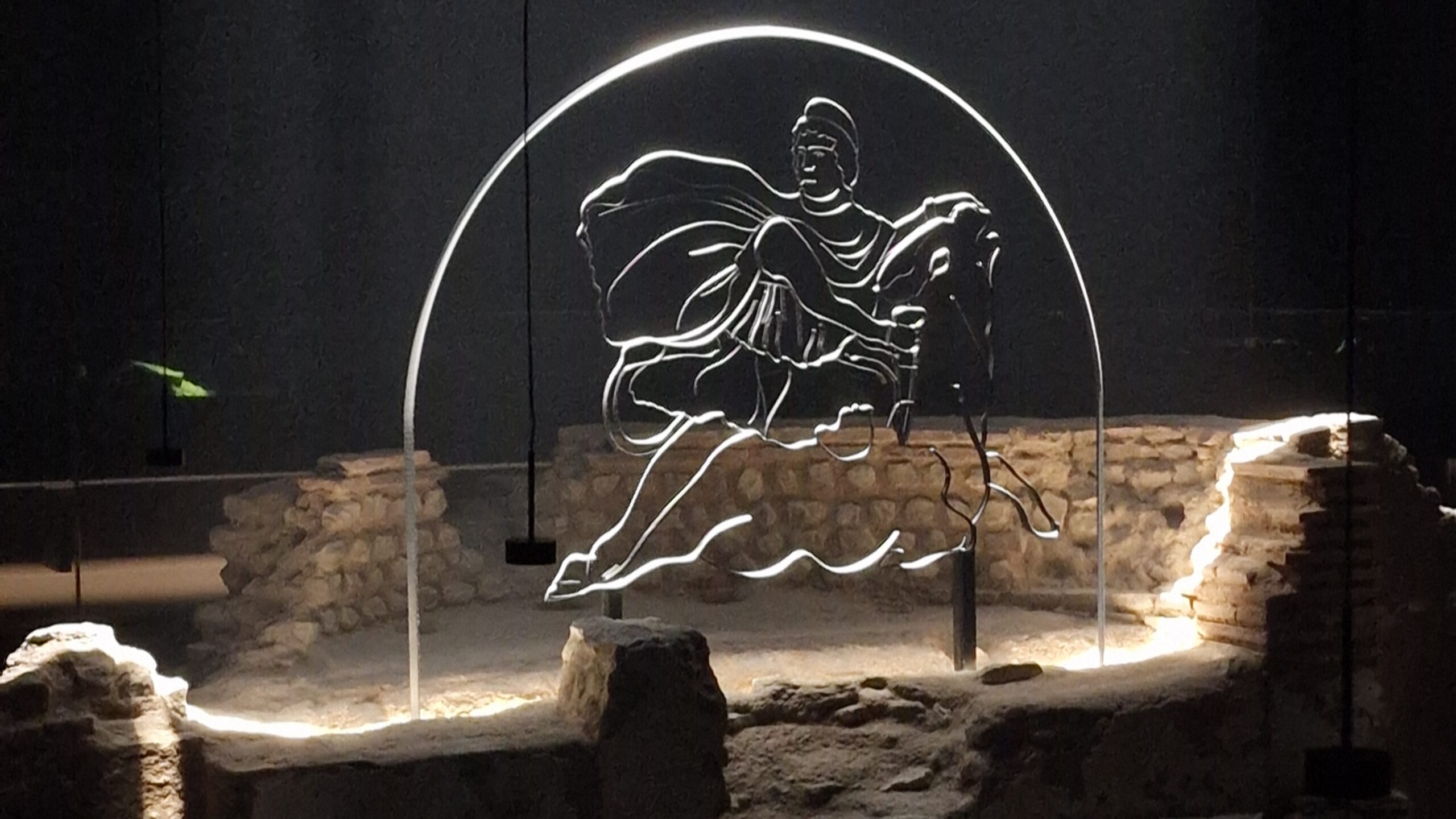
The oldest parts of the city are visible in many places, even today. Underneath Guildhall, the late Medieval power centre of the City of London, you can visit the traces of the old amphitheatre. Bloomberg’s European headquarters hide the Mithraeum in their basement. And at more than one location, you can find traces of the old Roman wall.
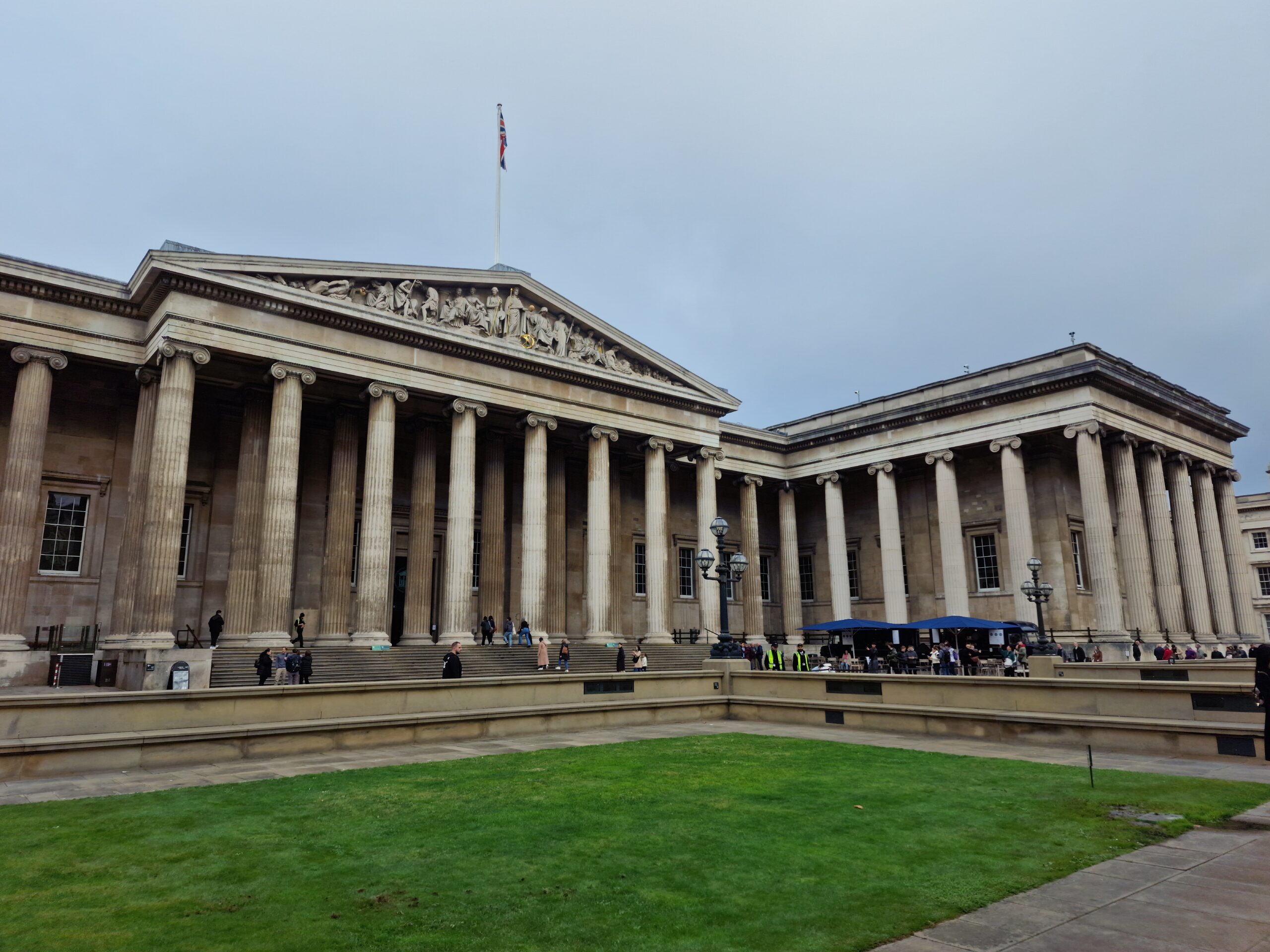
Both the London Museum and the British Museum house collections on the period.
The City
The big sturdy walls of the Roman fortress have remained important to this day: they mark the boundaries of the City of London. The Square Mile is the historic financial district. The City of London Corporation governs over it, led by a yearly elected Lord or Lady Mayor of London. It is a city as well as a ceremonial county and a local government district within whose borders special rules and laws apply.
Norman Conquest of 1066 CE
From Anglo-Saxons to Normans
In the Anglo-Saxon period, the Essex Kingdom would know of a town, called Lundenwic. Settlers from the mainland built it to the west of the Roman settlement, in modern day Aldwych, Westminster. Only after the Viking invasions by the Danes, King Alfred the Great – first King of the Anglo-Saxons – repopulated what he would call Lundenburh. The old walls provided safety, but by the Eleventh Century, the port foundations had all but crumbled. And it would take a Norman invasion and a new king to restore the city to its former glory…
In 1066, King Edward the Confessor dies childless. The Witenagemot proclaims his brother-in-law as King Harold and crown him at Westminster Abbey. He will, however, not be king for very long. For in 1051, it appears King Edward had appointed a successor in Duke William of Normandy, his first cousin once removed. (William was the grandson of Edward’s uncle.)
What happens next is history: After the coronation of King Harold II, William launched an invasion on the kingdom. He lands in Pevensey on the south coast and marches on Hastings where a battle takes place on October 14th. He defeats Harold (who dies at the battle) in the Battle of Hastings, a story famously captured by the Bayeux Tapestry. But the conquest is not over yet… First, he needs to fight off the claim of yet another new nominee for the crown: Edgar the Ætheling. The fact that he and his troops aren’t that well known by the general public tells you all you need to know about the fate of Edgars campaign. On Christmas 1066 the coronation of William I, king of England takes place in Westminster Abbey.
The coronation (1066)
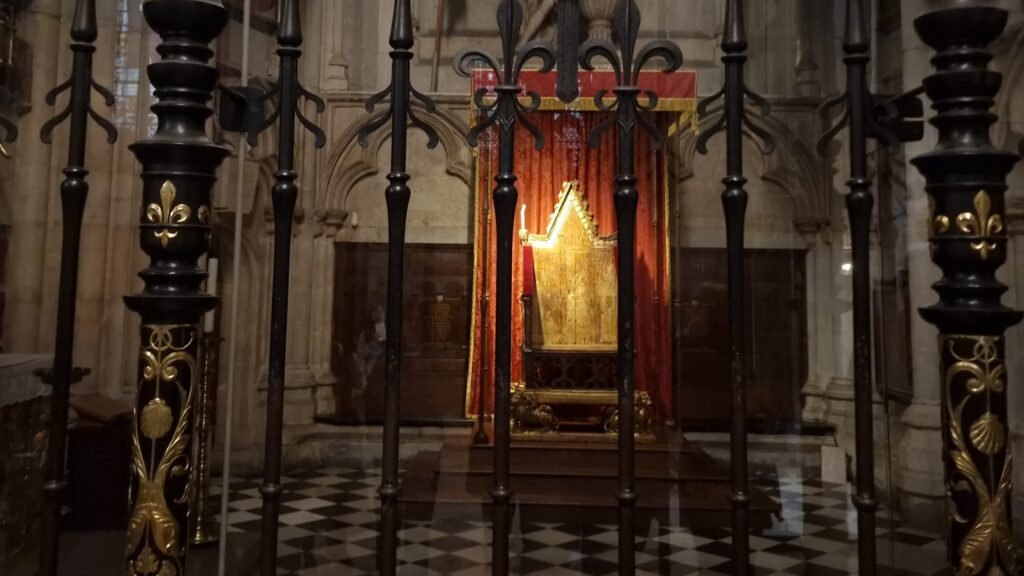
Edward the Confessor had built both the Palace of Westminster and the Abbey next to it. Although the nave was still under construction, William chose the Abbey as the place of his coronation. (Just as Harold II had done earlier that year…) This way he connected his reign to that of Edward.
There are two main accounts of the occasion. The more favorable Carmen Widonis (or Carmen de Hastingae Proelio) from 1067 by Guy, the bishop of Amiens. Another, less flattering version of the story is one by Orderic Vitalis. He wrote his Historia Ecclesiastica between 1114/1115 and 1142.
A procession started at the palace. It consisted of William and people such as the archbishops of Canterbury and York, as well as the Norman bishop of Coutances. As all kings and queens who would come after him, William was put on a dais at the front of the church by Ealdred of York, for the people to see. Then, the bishops asked the amassed nobility: “Do you accept the new king by your free choice?”
Soldiers outside mistook the noise of them answering the question. They thought a riot or a coup was taking place inside. Their reaction was to start looting and pillaging the surrounding houses. But the screams and the ruckus that came with it, in turn were mistaken by the people inside who thought they were under attack. The noblemen rushed out to defend their new king (and, mainly, themselves).
According to Orderic, William and the bishops finished the rituals inside the church, shaking from fear. His account however, dates from about a lifetime after the events. And whatever the truth might have been… Edward, Harold II and William together cemented Westminster as a place of political power. And all English, and later: all British, monarchs since had their coronation in the Abbey.
A Tale of Kings & Castles
And so the new king took off where Edward the Confessor left of: at Westminster. Salient detail in all of this: William I technically never really conquered London. A peaceful transition of power was in the interest of both the remaining Anglo-Saxons and William’s troops. So in a way the new king condemned himself to Westminster, outside of the square mile. Not long after his coronation, in the William Charter to the City of London (1067) he enshrines the rights of the city, its laws and customs. The City of London enjoys a unique degree of autonomy ever since.
London’s most obvious reminder of William I is undoubtedly the White Tower, the central structure of the Tower of London. Its construction, notably right outside of the square mile, started around 1078. It was built as a means to prevent internal uprisings rather than to protect against outside invasions. The stones for the building came all the way from Caen in Normandy and served as a very prestigious but also very clear sign of who reigned the land now. Many more Norman-style castles would be built in the upcoming centuries.
By granting the City of London special status, future kings and their governments would need a slightly different centre of power. William II would go on and build Westminster Hall, right next door to the Abbey. He used it for royal feasts and gatherings and it elevated Westminster to an even more central place in the kingdom. In the upcoming century, a number of institutions would slowly move from Winchester in Wessex to Westminster.
Another important example of a Norman castle from around the same time is Windsor Castle. Also built by William I, it is the oldest and largest occupied castle in the world.

A Plague, and a Great Fire in 1666 CE
Death…
The Great Plague of 1665 was the last major epidemic of the bubonic plague in England. It killed approximately 100,000 people, a quarter of the city’s population, in about 18 months. Many wealthy denizens fled to the countryside. (Among them one Isaac Newton, working on calculus, optics, gravity and more…) When, a year later, on 2 September, disaster struck… The last hotbeds could still be found in London’s slums.
It was early morning on Pudding Lane. A fire broke out in Thomas Farriner’s bakery. Due to the drought that Summer combined with fierce eastern winds, the fire spread rapidly through the city. A fire storm erupted and in the ensuing days the fire destroyed over 13.000 houses, 87 churches and the Royal Exchange. Even the lead roof of the old Saint Paul’s Cathedral melted away from the intense heat. Only after the creation of large firebreaks (by blowing up healthy buildings with the help of gunpowder) and the subsiding of the winds four days later, the fires finally extinguished.
We staid till, it being darkish, we saw the fire as only one entire arch of fire from this to the other side the bridge, and in a bow up the hill for an arch of above a mile long: it made me weep to see it. The churches, houses, and all on fire and flaming at once; and a horrid noise the flames made, and the cracking of houses at their ruins.
Samuel Pepys, Diary entry of Sunday 2 September 1666
… and Rebirth

Sir Christopher Wren would become Surveyor of the King’s Works a few years after the disaster. He originally suggested a total redesign of the city, but due to logistical issues and complex legal claims, he could not execute his master plans. In reality, most Londoners just wanted their homes and shops restored to the way they were before the fire destroyed them.
Despite this public pushback, Wren still got to put his stamp on the city. He was commissioned to rebuild 51 parish churches and he got to rebuild Saint Paul’s Cathedral (an undertaking that was already being talked about before 1666).
Wren was not the only one who had to compromise. The people had to do so too: The London Building Act of 1667 made it so that the new buildings had to be constructed of brick or stone. It gave London a new, distinctly Georgian look.
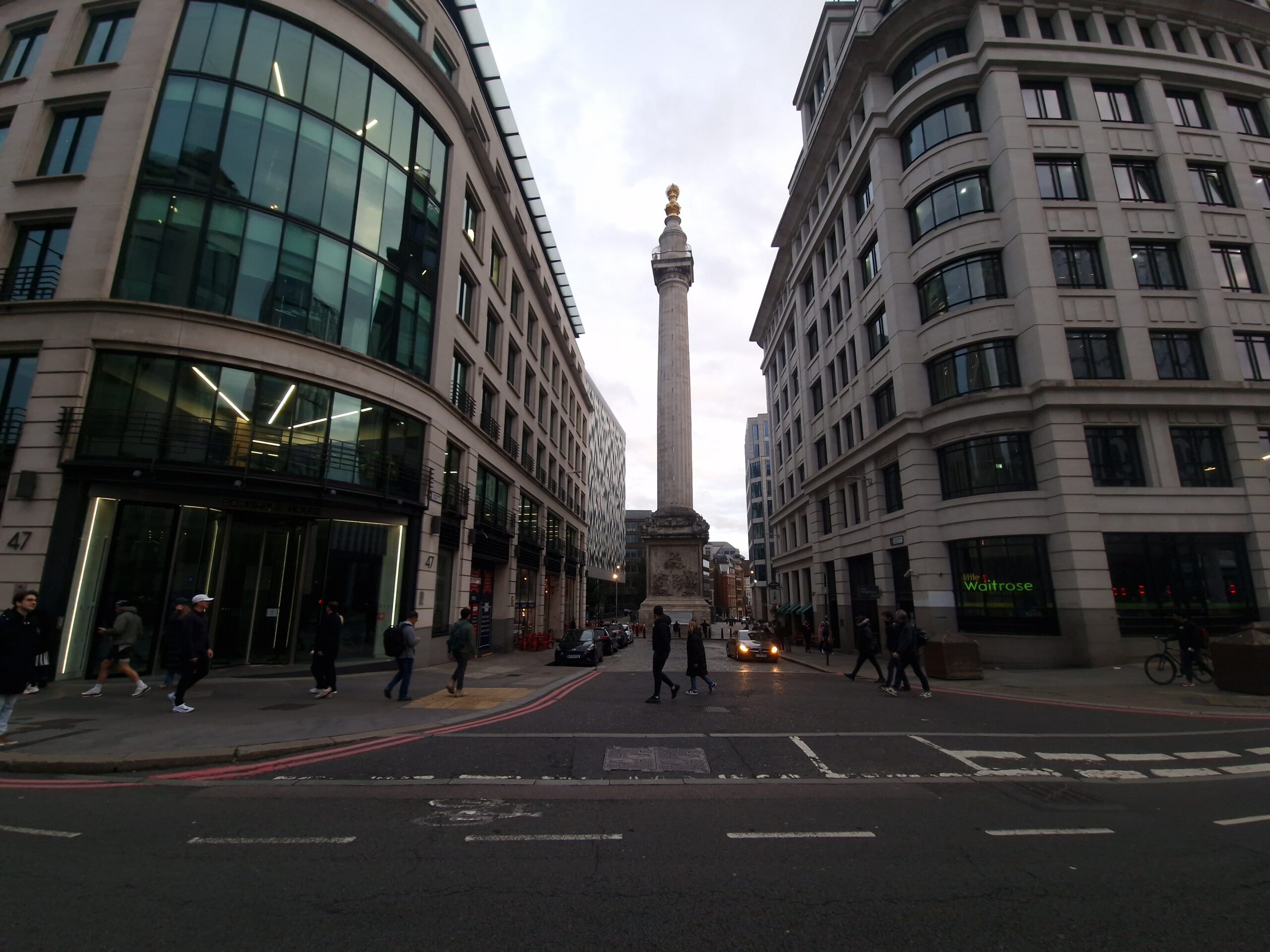
The Monument
202 feet away from the presumed location of where the Great Fire started, Christopher Wren and Robert Hooke designed a massive, 202 feet tall column. The Monument was supposed to both serve as a memorial remembering the disaster, and as a giant zenith telescope. However: the vibrations of passing carts on the surrounding cobblestone roads rendered the building unsuitable for the purpose of conducting research.
Recent evidence suggests the building was – intentionally – built in the wrong place. This way it could better reflect the new layout of the city.

The Development of the Masses in 1851 CE
Empire
By 1851 Britain was well underway as an imperial power. Where they had suffered losses the American Colonies with the Treaty of Paris in 1783, they had since pivoted focus elsewhere: they tightened their grip on India, established colonies in Australia and seized control over important maritime points: Gibraltar, Malta, Cape Town,… Two main drivers powered the empire: a strong naval force ensuring the Pax Britannica, and an early Industrial Revolution that interconnected it all into one big logistical machine.
The Great Exhibition of 1851
When Henry Cole, member of the Royal Society of Arts, visited a French industrial exposition, he decided Britain needed an exposition too! One far bigger and more international, fit for an empire. He persuaded both the government and the queen of its importance to the nation. They establish a royal commission to lead the project. Prince Albert soon became president of this committee as he strongly believed that trade could bring nations closer together. This, he contemplated, would make them less likely to go to war. And even though he faced a lot of public pushback out of fear for foreign spies and other radicals, he turned the event into a great triumph.
In a record time, they constructed the Crystal Palace in Hyde Park. Made out of cast iron and plate glass, it was more than half a kilometer long and big enough to enclose the pre-existing elm trees of the park. The mere construction of the building, on time and within all logistical constraints thereof, in itself can be called an industrial miracle.
During the time the exhibition ran, Queen Victoria visited often. She wrote about her visits in her journal with great enthusiasm and astonishment. Her presence elevated the exhibition to a prestigious social event and furthered the reputation of her reign as modern and tech-forward.
Albertopolis
The whole affair was also an enormous financial success. With six million visitors, both from the ‘elite’ and the working class, the Great Exhibition gathered a profit of approx. £186,000 (or for us, people in 2026: tens of millions of pounds!). The money made with the Exhibition was reinvested into a more permanent collection: the Museum of Manufactures (1852). And an area of land, south of Kensington park – critics at the time called it Albertopolis – was bought and a new museum building was built. During its almost 200-year history, the museum had many names. We know it today as the Victoria & Albert Museum.
Other buildings on-site include the Royal Albert Hall and the Imperial College. Right next door, in Kensington Gardens, Albert looks over his legacy from the Albert Memorial.

London Blitz: A Second Great Fire in 1940 CE
Blitz
The Blitz was the bombing campaign by Nazi Germany on Britain in the early years of the Second World War. Many cities were hit, but none like London was… Starting on Black Saturday, 7th of September 1940, the city suffered a bombing campaign that lasted 57 consecutive nights. The first nights, the bombs mostly fell on East London, where most of the docks were situated. Only the most suburban parts of the city escaped the intense destruction.
Londoners found shelter in shallow holes, in Anderson shelters and in the London Underground. While the government first discouraged it, these underground shelters were soon fitted out with bunk beds, chemical toilets and even some light entertainment (music, books, tea…). But: The protection these shelters offered, was not absolute. Surface stations like Balham and Trafalgar sustained damage from direct hits. In the case of Balham, over 64 people died from the ensuing damage (including bursting pipes, flooding the subway tunnels).

The night of 29-30 December is also known as the Second Great Fire of London. A fierce raid by the Luftwaffe dropped incendiaries on an area larger than that of the 1666 Great Fire. The (often voluntary) firefighting brigades had a rough time and battled a water shortage due to the low tide, fire storms, loss of communications,…
It is during this raid that Herbert Mason made his famous photograph of the dome of Saint Paul’s Cathedral. The church and its surroundings had been hit by 28 incendiaries, but the dome remained standing through the smoke. (This was solely due to the Saint Paul’s Watch, installed on direct order of prime minister Winston Churchill.) In the following days the photograph was used as propaganda by both Brits and Germans.
Museums
The Imperial War Museum have a branch on the site of the government bunkers from this era. The Churchill War Rooms show the life in the bunkers as well as contextualise the figure of Winston Churchill.
| Long before the first bombs fell, little more than a week before Britain’s official declaration of war, the British Museum and the Victoria & Albert Museum had already acted, on explicit government advice. They evacuated the most important parts of their collections to Tube stations, country houses and quarries in Wales. Not all parts of the collection could be evacuated, and both these parts that were left behind as well as the very buildings of the museums themselves sustained damages. |
Phoenix
The large-scale destruction of the city left room open for London to become a playground for Brutalist architects. In the area of Cripplegate, for example, the Barbican Estate was built. And during the cleaning of other parts of the city, more of the city’s Roman remains were uncovered. One such example is the Temple of Mithras that was found during excavations of a bomb site near the Walbrook stream, in 1954.
The coincidence brings us back full circle. The history of London is the history of a city that has been built many times over. And as a result, its fabric reads as a patchwork of history.
Our website will never manage to gather each and every interesting fact. We won’t even manage to show you all of the sights. It is a city that encourages you to wander, to explore and to stumble into it’s many stories. I stand firmly in my belief that these five historic moments are a good basis to serve your first meeting with this beautiful city. But even firmer I know it is only barely enough.
So now it is up to you! Go and explore this love of my life. I recommend starting here.