London is famous for its many green and blue spaces. The Royal Parks are among the most famous and well-visited. They served as leisure grounds for the Crown, but have long since opened up to the public. From Kensington to Greenwich, they serve to help Londoners to relax and to take a break from the bustling city life…
| 🎫 Tickets | Free entrance |
| 🕐 Opening hours | Depending on the park: Opening between 05:00 and 07:00 Closing at dusk / midnight |
| ⏱️ Time needed | 1-3 hours per park |
| 📚 What to visit? | Monuments, flora and fauna |
The Royal Parks
The Old Police House, Hyde Park
London, W2 2UH
This page contains information on the central London parks. We are working on separate sight pages for each!
On this page…
Similar sights
Sometimes, people call London the world’s largest urban forest. Over a fifth of its area has tree cover and almost half of its area is green or blue space. And of those spaces, 2000+ hectares are part of the Royal Parks. These eight/ten parks used to be recreational grounds for the royal family, but now serve as freely accessible open spaces for all to enjoy…
Hyde Park & Kensington Gardens
Henry VIII acquired Hyde Park from Westminster Abbey in 1536. While nowadays, these parks are considered two separate but neighbouring green spaces… It opened to the public as early as 1637. And it was ‘only’ in 1689 that the two parks got separated. Were it not for this separation, Hyde Park (and not The Regent’s Park) would be the largest park in central London.
Hyde Park
Without a doubt, Hyde Park is the most famous of the Royal Parks. Maybe even of all the parks and green spaces in London. It has a lot to offer the many visitors: the Diana Memorial Fountain, rose gardens, Speaker’s Corner, the Serpentine Lake, Victoria Gate,… The park is an Historic Grade I-listed urban park. It has seen many historic events: from Parliamentarian encampments in the Civil War to a large Crystal Palace during the Great Exhibition (1851), and from speeches on Speaker’s Corner to world famous concerts in the vast green spaces.
The vista from the bridge over the Serpentine to Westminster Palace is one of thirteen protected vistas of the London View Management Framework.
Kensington Gardens
When King William and Queen Mary built their new palace on the edge of the then Hyde Park, they cut the green space in twain. The eastern half would remain Hyde Park, and the western side would become Kensington Gardens. Almost forty years later Queen Caroline and her garden architect, Charles Bridgeman, would build the Serpentine lake on the border between the two. The gardens closed to the public and it was only in 1841 that the populace was back allowed into the formal gardens. And even then, they were granted access on Saturdays only. And finally a third queen, Queen Victoria, would add the Italian Gardens and the monumental Albert Memorial.
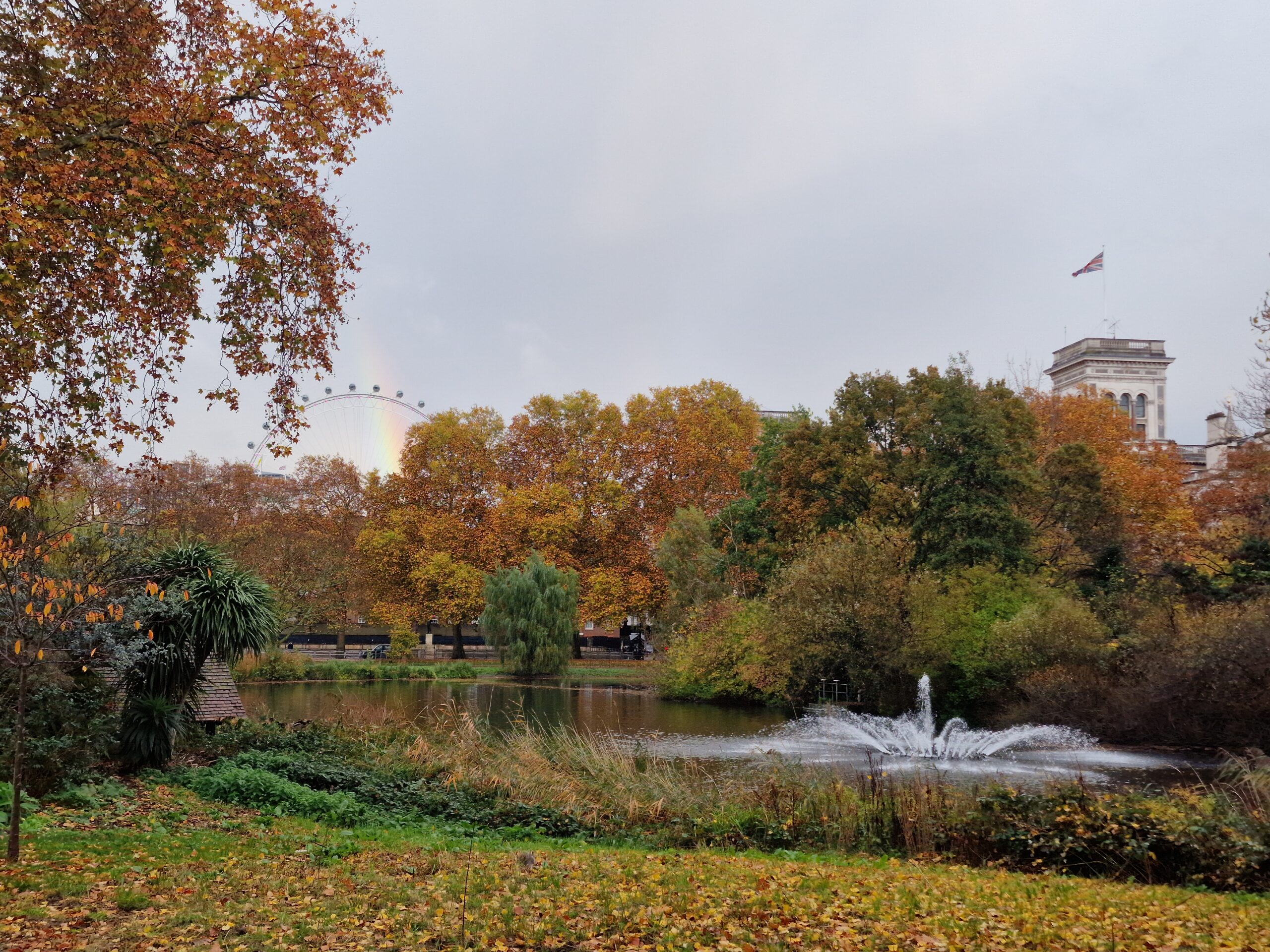
St. James’s Park
Saint James’s Park is the oldest of the Royal Parks and its Duck Island Cottage serves as the offices of the London Gardens Trust (formerly the London Historic Parks and Gardens Trust).
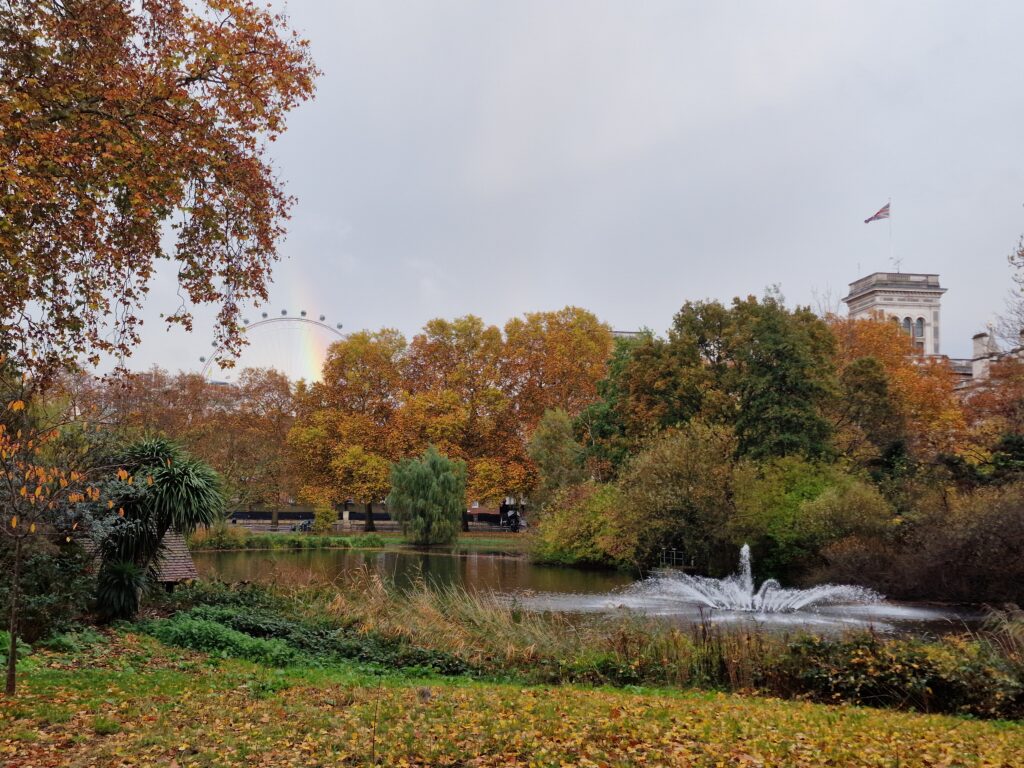
I might be a bit biased when I declare St. James’s Park to be my favourite of all the London parks. It all stems from a rainy morning, years ago. Early in our relationship, this is where my husband and I spent our first morning on our first trip together. The weather was… Well, it was very London. But it was also early, so not many places where one could get coffee. Luckily St James’s Café was open.
Before the 1530’s, Saint James’s Park was the site of a medieval hospital dedicated to St. James the Lesser. King Henry VIII bought it to be part of his hunting and festival grounds.
Henry’s successors would take over the land management. James I improved drainage and added Rosamond’s Pond and what later became the Duck Island. He also started keeping his menagerie here, before it later moved to Tower of London and ultimately, by the late 1820s, to the Zoological Society in The Regent’s Park. Birdcage Walk still reminds us of where the aviaries once stood. It was Charles II, however, who made the most drastic changes. He ordered a complete redesign by a French landscaper, André Mollet. It was him who opened the parks to the public. And finally, King George IV, while Prince Regent, ordered John Nash to add a touch of romance to the very formal French design.
When visiting this park, consider these highlights: Horse Guard Parade, Admiralty Arch and The Mall, the King’s pelicans and Duck Island.
The Green Park
The smallest of the Royal Parks is The Green Park. It was created by Charles II to be able to walk from Hyde Park to St. James’ Park. Even though it neighbours many palaces, the park is known for its simplicity and its lack of formality. It is a place you can find many sunbathers on the grass. It also houses a few monuments: the Bomber Command Memorial, Memorial Gates, the Canada Memorial, and the Memorial Gardens to Queen Victoria.
Greenwich Park
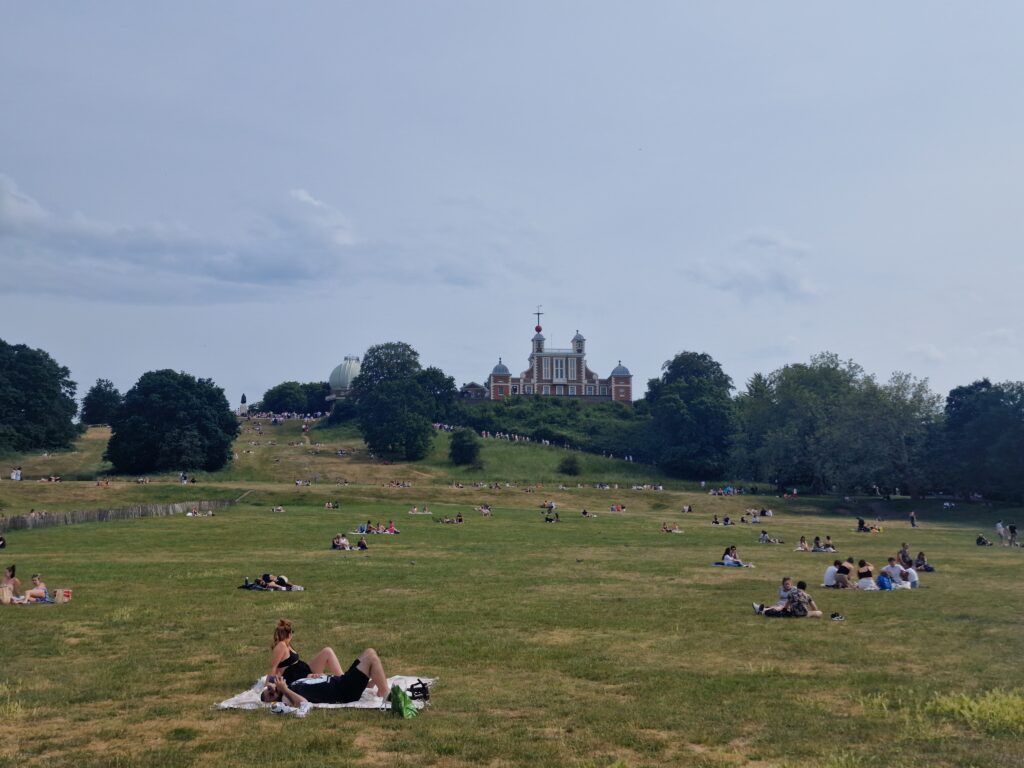
A huge chunk of what tourists visit in Greenwich is part of the Maritime Greenwich UNESCO World Heritage Site. The Grand Axis, that runs through the park, including the view from the General Wolfe statue to the dome of Saint Paul’s Cathedral, is part of this site.
The view from the General Wolfe statue is one of nine protected vistas of Saint Paul’s. (They are all part of 13 vistas protected by London View Management Framework)
Greenwich has been a settlement since Roman times. In the early 14th century, an estate of 81 hectares (200 acres) was owned by the Flemish Saint Peter’s Abbey in Ghent. When the land reverted back to the crown in 1427, Henry VI gave it to Humphrey, Duke of Gloucester and brother to his father, king Henry V. The house he built became the palace of Greenwich (‘Placentia’). It was the birthplace of Henry VIII, as well as that of his daughters Mary I and Elizabeth I. The park was transformed by Anne of Denmark, who received it from her husband, James I. She had the Queen’s House built, although she would not see it finished. 50 years later, Charles II commissioned André Le Notre (of Versailles fame) to design a new landscape. He also employed Sir Christopher Wren to build the Royal Observatory.
The Regent’s Park & Primrose Hill
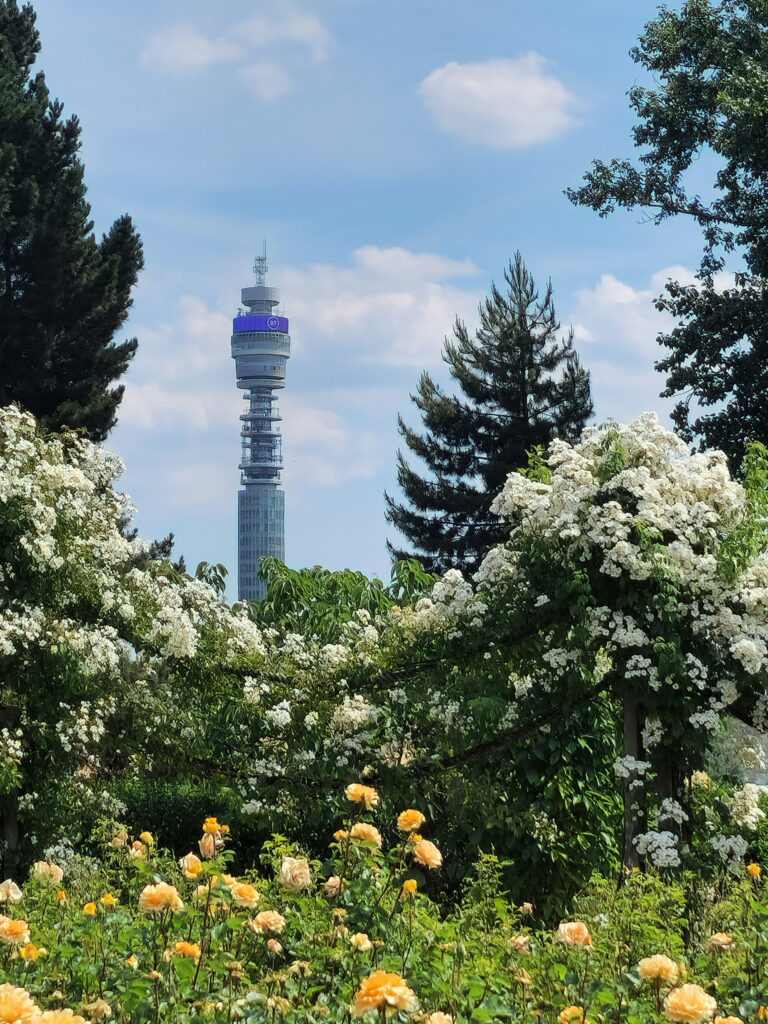
By narrow margin, the Regent’s Park is the largest in central London. The land came into the crown at the dissolution of the monasteries. It was used for farming and hunting, until the 1810s when the Prince Regent, the later King George IV, proposed to turn it into a pleasure garden. His architects, John Nash and Decimus Burton, constructed not only the park but also the Crescent at the foot of the Park.
The Zoological Society build the ZSL London Zoo at the Northern edge of the park.
In the 1930’s Queen Mary’s Rose Garden were created in the inner circle. The inner circle is also home to the Triton Fountain and the Open Air Theatre.
The views from Primrose Hill, which is also part of the Royal Park (albeit somewhat separate from the Regent’s Park), on Saint Paul’s Cathedral and on the Palace of Westminster are two of thirteen protected vistas in London.