Once part of the British Museum, the NHM now competes with its big brother for the number one spot in the fight for the most popular tourist attraction in London! The museum focuses on the natural world, both living and mineral.
| 🎫 Tickets | £ 0,- Booking of an advanced timeslot is advisable |
| 🕐 Opening hours | 10:00 – 17:50 Some events are out of hours Closed 24 through 26 December |
| ⏱️ Time needed | 2-3 hours |
| 📚 What to visit? | The museum has five major collections: – Palaeontology (dinosaurs) – Zoology (vertebrates and invertebrates) – Entomology (insects) – Botany (plant life) – Mineralogy |
Natural History Museum
Cromwell Road
South Kensington, London
SW7 5BD
Discover the science! / Join an event! / The collections
Short remark, if needed.
On this page…
The first few times we visited London, we didn’t bother with the queues. Besides: we had so many museums on our list. Surely we weren’t missing out? In 2023 we finally visited. We were back the next trip round!
Similar sights

What to see: a central hall and five collections
The museum collections are spread over two gardens and four zones, each named after a colour to make navigation through the museum easy. The collections can also be divided, however, by scientific field. That is the approach we will take bellow, with Hintze Hall as the singular exception.
Shorter visits > The Museum’s Favourites
Haven’t got the time for a full tour? The museum offers some great lists with highlights!
Hintze Hall
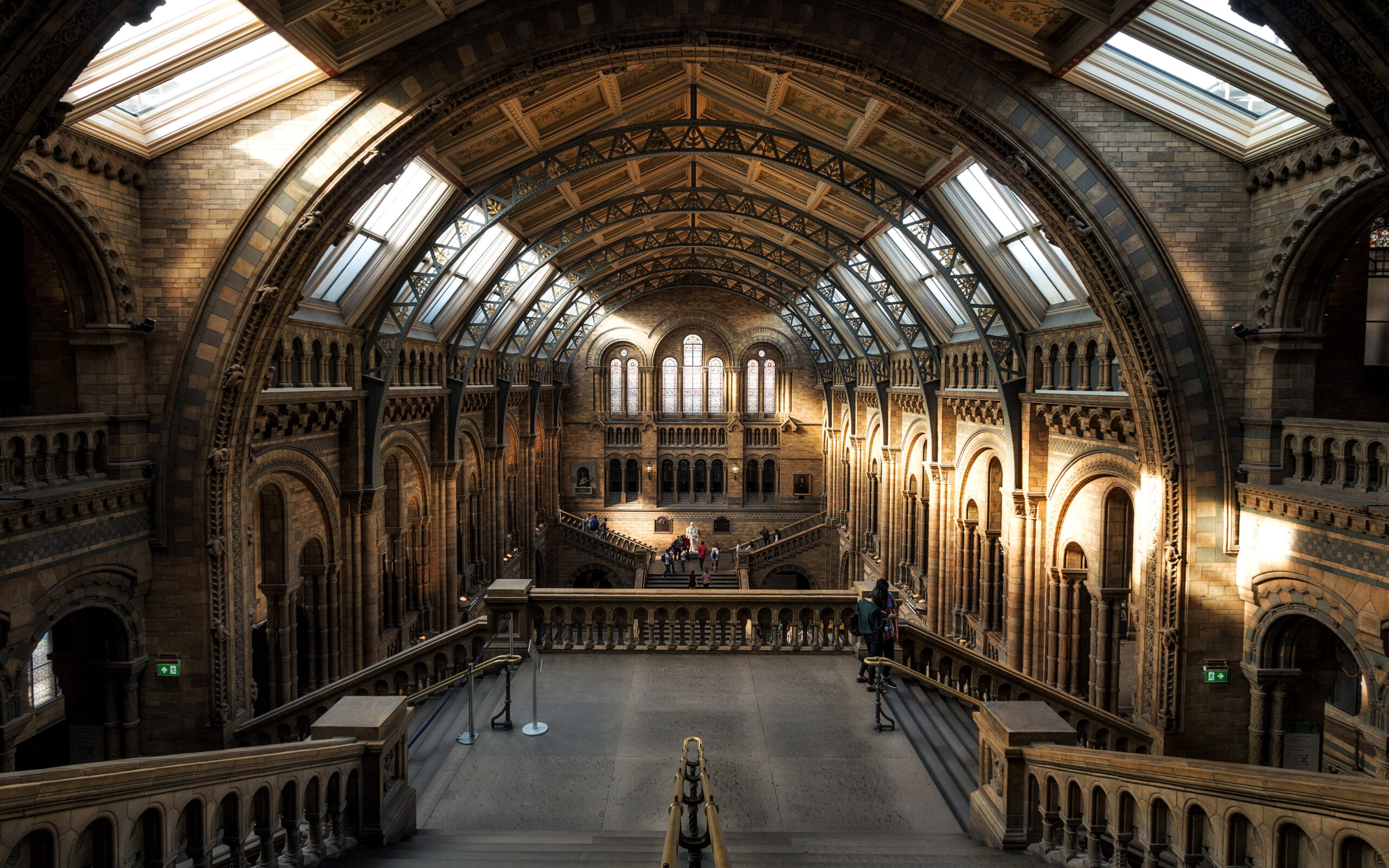
The museum building is a Victorian Romanesque design by Alfred Waterhouse. It is nicknamed the Cathedral to Nature. And nowhere in the building does that become more apparent than in Hintze Hall! The hall reaches heights of 18.3 meters (60 feet) at the gallery level and 22 meters (72 feet) to the appex. It is almost 33 meters (108 feet) long. Just long enough to suspend the 25.2 meters (82.7 feet) long Hope in. And an ideal display case for Waterhouse’s maginificent ceiling design.
The NHM has about 80 million specimens in its collection. Yet few enjoy the same celebrity status as Hope, the blue whale that hangs in the centre of the main entrance hall. Since 2017, she serves as the focal point in Hintze Hall. Before Hope, Dippy the Diplodocus occupied the same space. (And to add another famous specimen: in the Zoology Spirit Collection you can find Archie, the Giant Squid. But it must be said that Archie never featured as the Hintze Hall main attraction.)
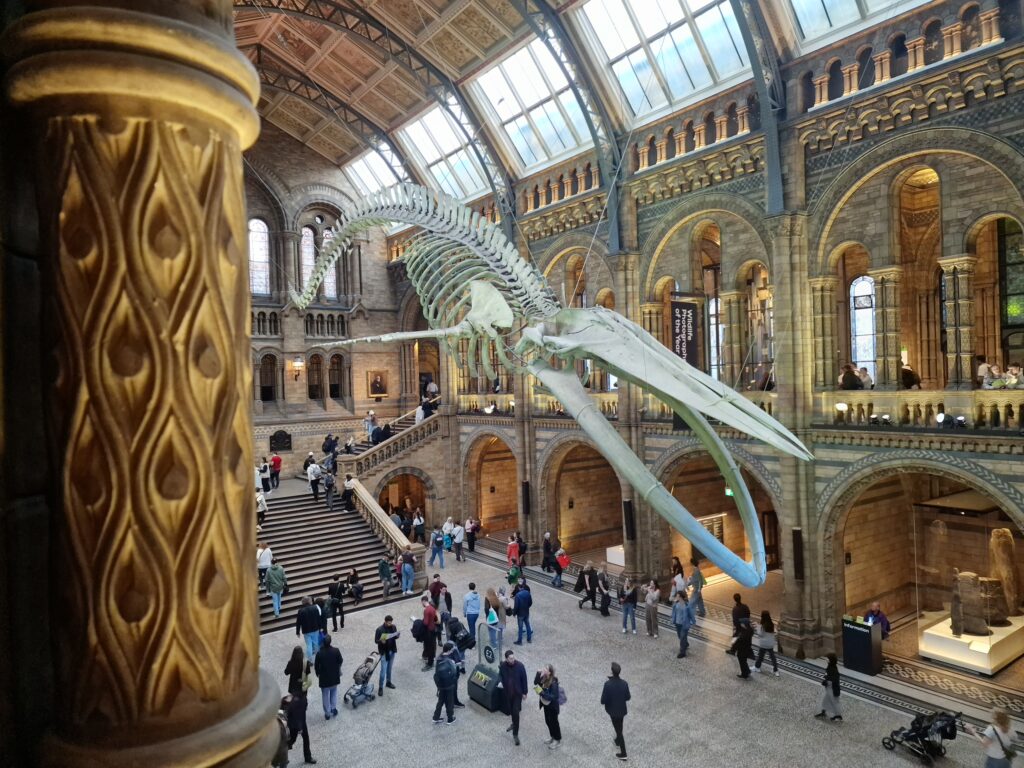
Other attractions in the hall include a statue of Charles Darwin, who sits at the top of the staircase, and highlights from all the collections the museum has to offer. (A personal favourite are the birds on the first floor.) And it is said that the hall also includes a playful jab at the museum’s first superintendent, Sir Richard Owen. He did not agree with Darwin on the Theory of Evolution and it is said that because of this, the stone carved monkeys on some of the pillars in the hall share features with Darwin.
More on the architecture of the Natural History Museum
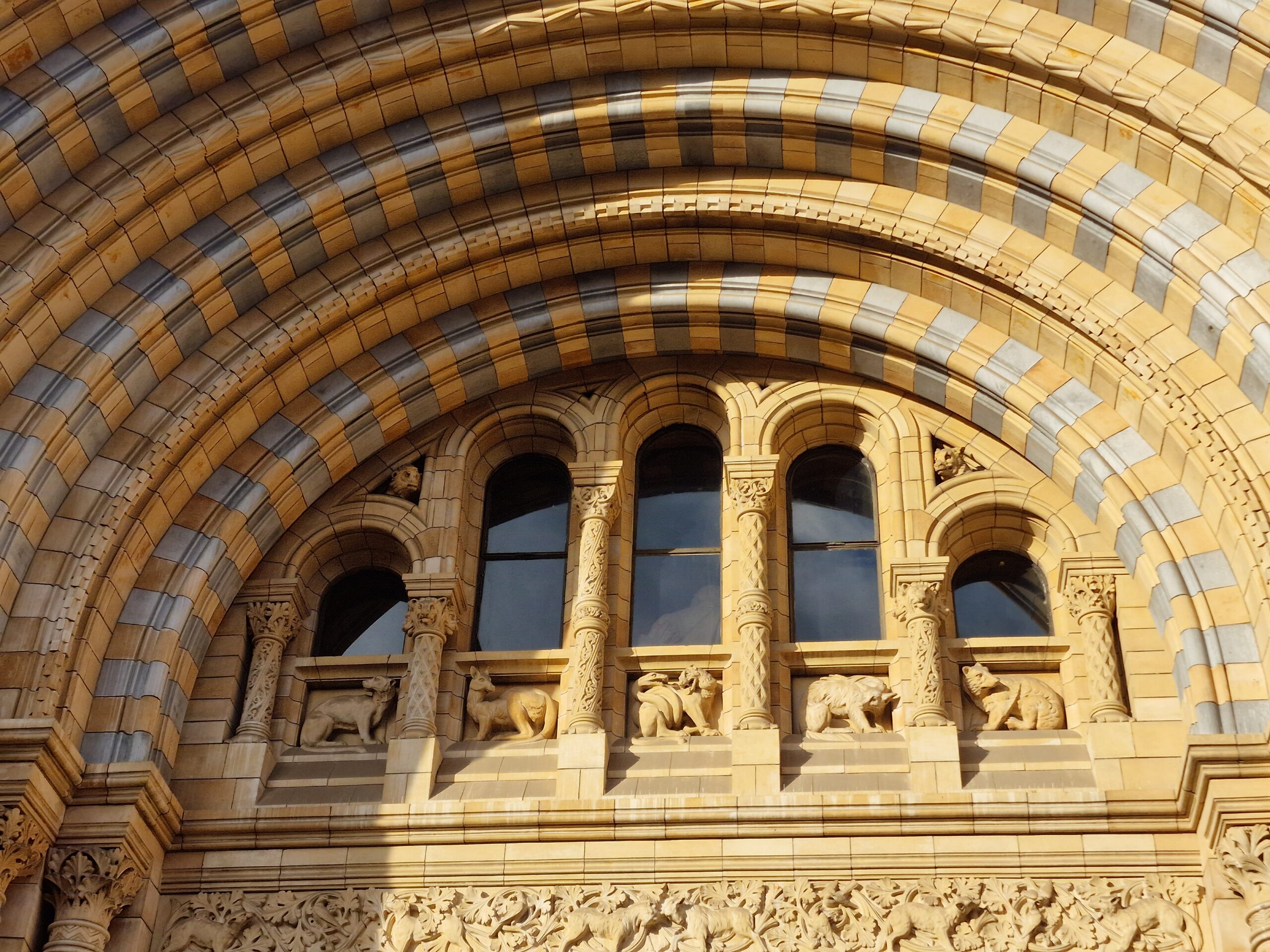
We could (and at some point, probably will) write a whole article on the sculptures and tiles included in the building. For those who want to wander around a bit, we can add the following: The carvings on the exterior are organised in the following fashion: the East wing (facing Exhibition Road) features extinct animals like dinosaurs and pterodactyls. The West wing (near the Wildlife Garden) features more recent, living species such as lions and monkeys. There is of course an element of change, as more species get extinct. Or in rare occasions, like happened with the Coelacanth in 1938, when species get rediscovered.
On the upper floor, surrounding Hintze Hall, the Cadogan Gallery displays some important objects. It is perhaps my favourite part of the whole museum. If you really haven’t got the time, (because you are in a hurry after spending too much time in either the Science Museum or the V&A…) visit these must-see galleries and the Vault (passing through the Mineral Gallery while you are at it).
The Birthplace of the Dinosaurs
Speaking of Sir Richard Owen: it was him who coined the term ‘Dinosauria’ (meaning ‘fearfully great lizard’) in 1842. As this is a good few years before the museum opened, we have to admit: the title of this segment is a bit misleading. But the museum does have quite the palaeontology collections. And those do not only include terrible lizard-creatures…
For instance: The collections also holds three human skulls turned drinking vessels, approx. 14,700 years old. These were found in Gough’s Cave, located in Cheddar Gorge, England. They are part of the anthropology collections.
Other collection groups include the fossil vertebrates (including the Dinosaurs collection), the fossil invertebrates and plants, and the micropalaeontology collections. The Palaeontology Department holds a good seven million species.
London’s Indoor Zoo
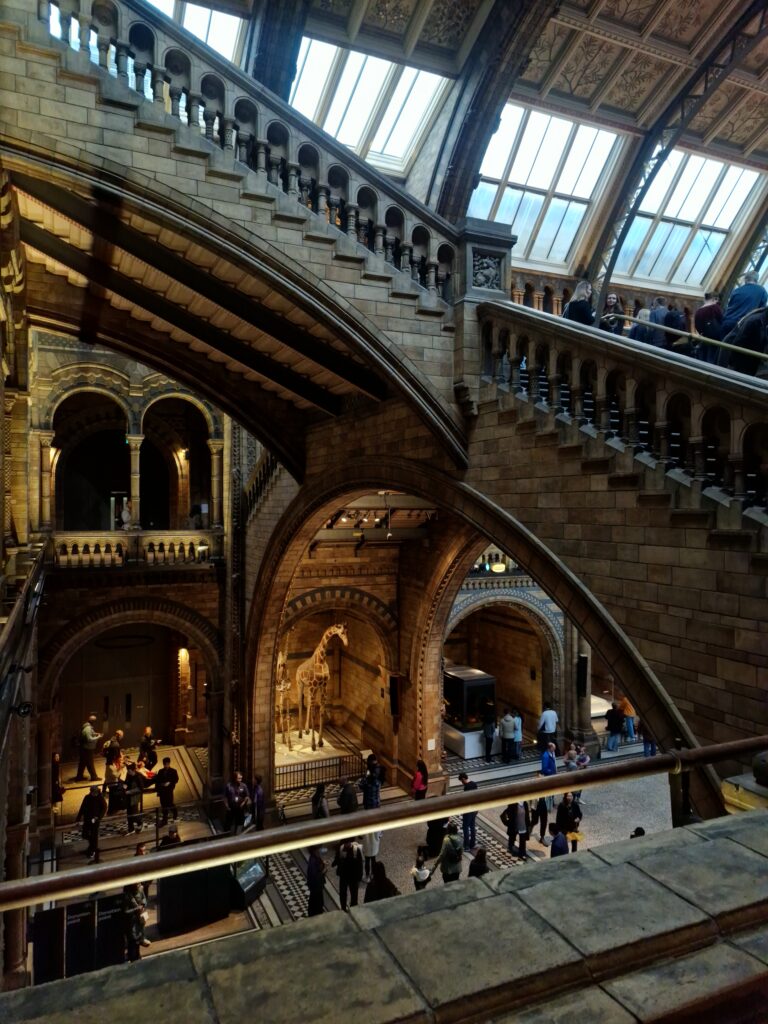
With all of the hundreds of thousands of specimens this museum has collected over its lifespan… You could practically call it an indoor zoo! Well… If a zoo would be a collection of specimens that are not-so-alive, that is.
Hope the Blue Whale, and Archie the Giant Squid aren’t the only museum inhabitants by a long shot! In the zoological collection alone there are about 29 million specimens. The collection includes about 95% of known birds and approximately 70% of all known mammals. And about half (up to two-thirds) of all porifera type material can be found at the NHM.
Among the most famous contributors are James Cook, Charles Darwin and Mary Kingsley.
Creepy Crawlies
The Entomology Collections include around 34 million specimens that span the last 300 years. It has it roots in the collections of Sir Joseph Banks and Sir Hans Sloane. The coleoptera collection is among the oldest beetle collections in the world and the Siphonaptera collection is an historically important gathering of fleas. Less itchy are the lepidoptera: almost half of the insect collection’s specimens are butterflies and the like. Both the hymenoptera (bees, wasps, ants,…) and diptera (flies) collections are considered among the world’s largest and most leading collections respectively.
Fungi and plants
The museum has approximately 8 million plant and fungal specimens in it’s collections. These include moulds, pressed plants, seeds, wood fragments,… It stores the largest collections of diatoms, algae and lichen. The museum also has important collections on ferns and slime moulds.
There is special attention for the oldest items: the historical, pre-Linnean botanicals. (Carl Linnaeus was a Swedish biologist and physician who formalised binomial nomenclature, the modern system of naming organisms. He is known as the father of modern taxonomy.) This part of the museums collections include specimens collected over 400 years ago.
Rock and Stone!
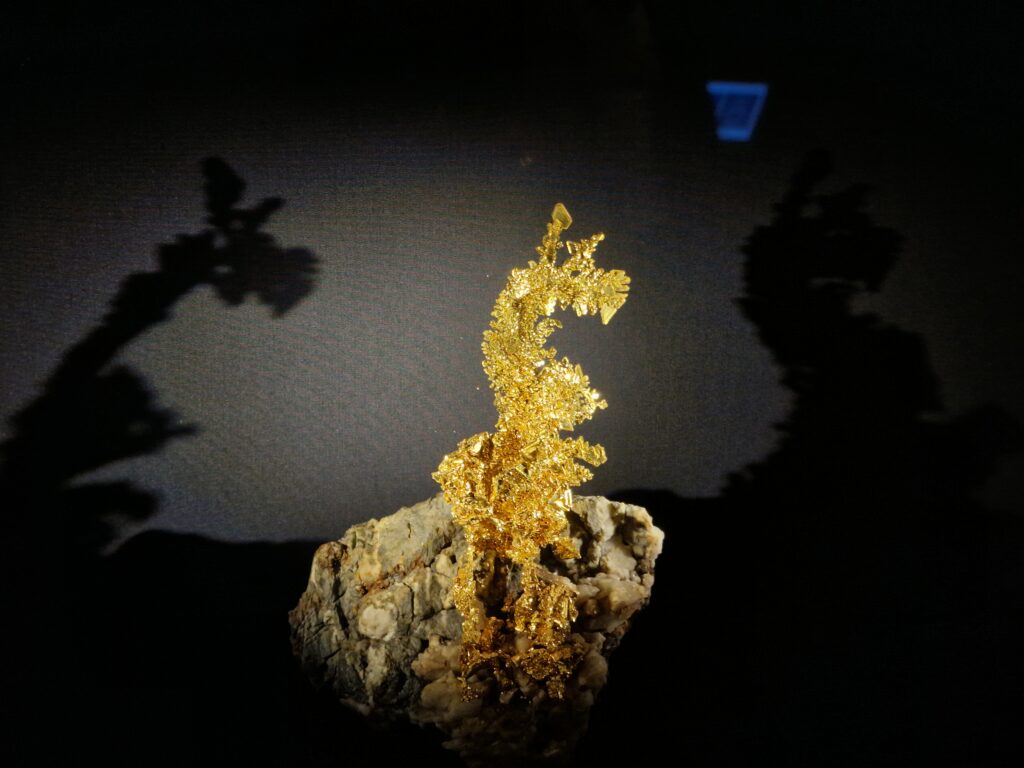
The Mineralogy Department holds both terran rocks, ores and minerals, as well as meteorites. It also does extensive research into ocean-bottom deposits. It holds a major collection of building stone and samples collected during scientific expeditions (eg. by HMS Challenger, onto Mount Everest or to Earth’s pole regions). The ore collection is significant for the field of economic geology.
The Mineral Gallery and the Vault hold many must-see pieces: the 4.5 billion years old Imilac meteorite, the Jubilee agate, the largest blue topaz gemstone in the world, the Dragon (rare crystallised gold), the Aurora Pyramid of Hope, and more!
The museum has a whole wing on geology and the history of our planet. Among the highlights here are the big ‘Globe Escalator’. Visitors ride through a celestial map and can look at some incredible specimens, including one of Europe’s (maybe even the world’s) most complete Stegosaurus skeletons. Another favourite with the public is the earthquake simulator, modelled after a real earthquake that struck Kobe, Japan in 1995.
But wait! There is more…
Need a breather? Surrounding the museum, you can find conservational gardens. Enjoy the fluttering of fireflies at the pond. Listen to the local birds. Enjoy the fossils of Hypsilophodons and Diplodoci.
Not generally accessible but as important as the other collections is the state of the art molecular collection that conserves genetic material for future research. Part of this database is part of the CryoArk that collects and preserves a vast British zoological biobank. Another major museum initiative is the Darwin Tree of Life project, aiming to sequencing the DNA of all complex life on earth. Similar important projects are running to research pollinators and their habitats, as well as schistosome parasites and their snail intermediate hosts.
The museum also has a Library and Archives that has a collection of natural history literature, art and manuscripts.
History of the Museum
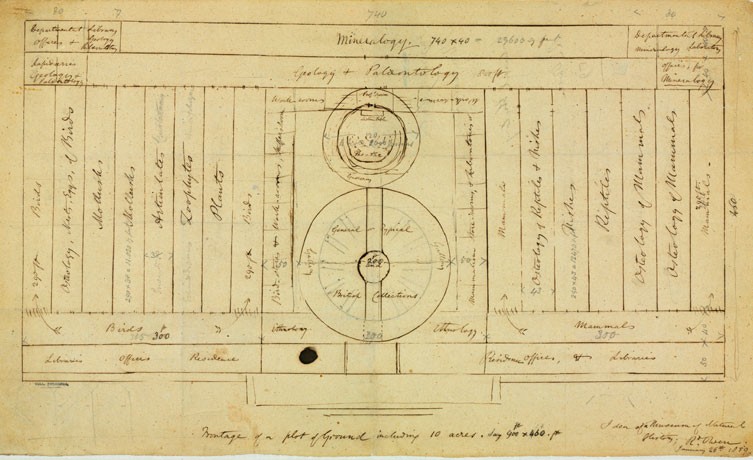
The collection of the Natural History Museum used to be part of the British Museum, albeit from 1881 with its own building in South Kensington. The collection began with large donations by Sir Joseph Banks and Sir Hans Sloane.
It was Sir Richard Owen, who would fiercely campaign for the new building. He became the British Museum’s superintendent of Natural History in 1856, and his frustration with a lack of space for his collections led to him becoming a fierce campaigner of the museum branch. It was particularly important to Owen that this new museum was large enough to display all aspects of nature, even the largest of animals – whales.
‘The very fact of the whales being the largest animals upon the Earth, is that which makes it more imperative to illustrate the fact and gratify the natural interest of the public by the adequate and convenient exhibition of their skeletons.’
~ Quote by Sir Richard Owen
As part of the British museum, the collection was also included in the war efforts of that institution to protect as much of the items as possible from potential war damage. Although: the Natural History branch remained open with most of it’s collections remaining in situ.
The British and the Natural History Museums ultimately would formally split in 1963, when the NHM went it’s own way as the British Museum (Natural History). The museum merged with the Geological Museum not much later, in 1985-86. It changed its name to the current Natural History Museum in 1989 (for the public) / 1992 (formally).
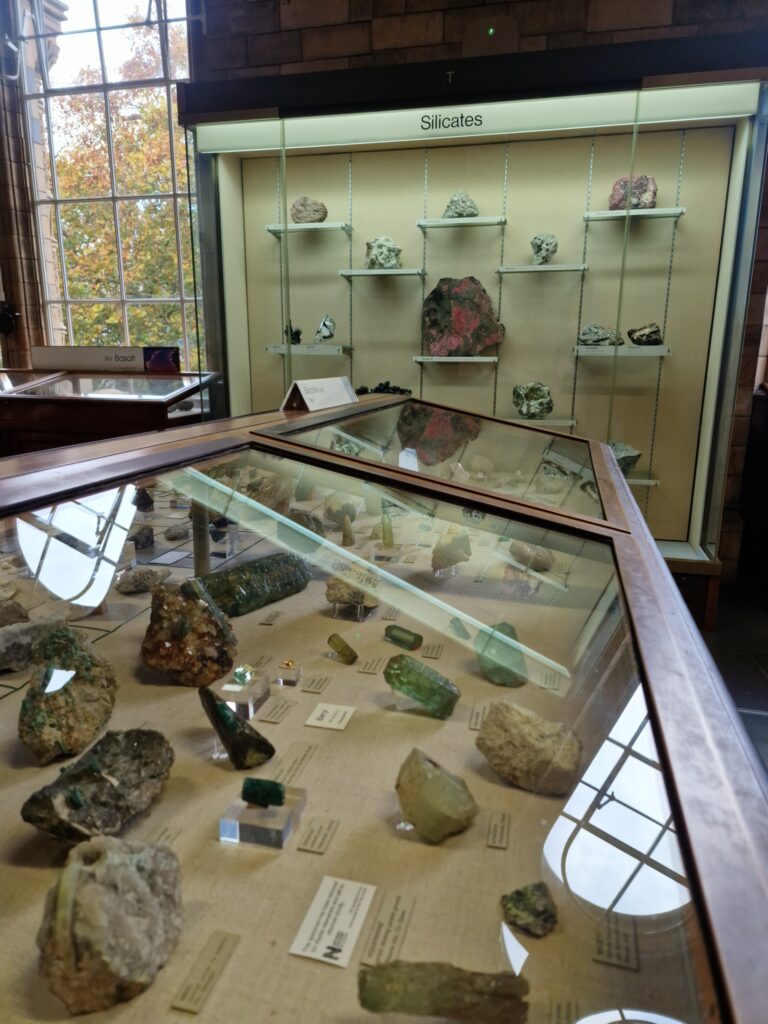
The Geological Museum dated back to 1837, as the Museum of Economic Geology on Craig’s Court, Whitehall. The foundation of that museum happened at the suggestion of the first director general of the Geological Survey, Henry de la Beche. It opened to the public by 1841.
When the museum moved to Piccadilly / Jermyn Street in 1851, it changed its name to Museum of Practical Geology. Prince Albert formally opened it, only two weeks after his Great Exhibition began in Hyde Park.
A second name change, to Geological Museum, dates back to its move to Exhibition Road in 1935.