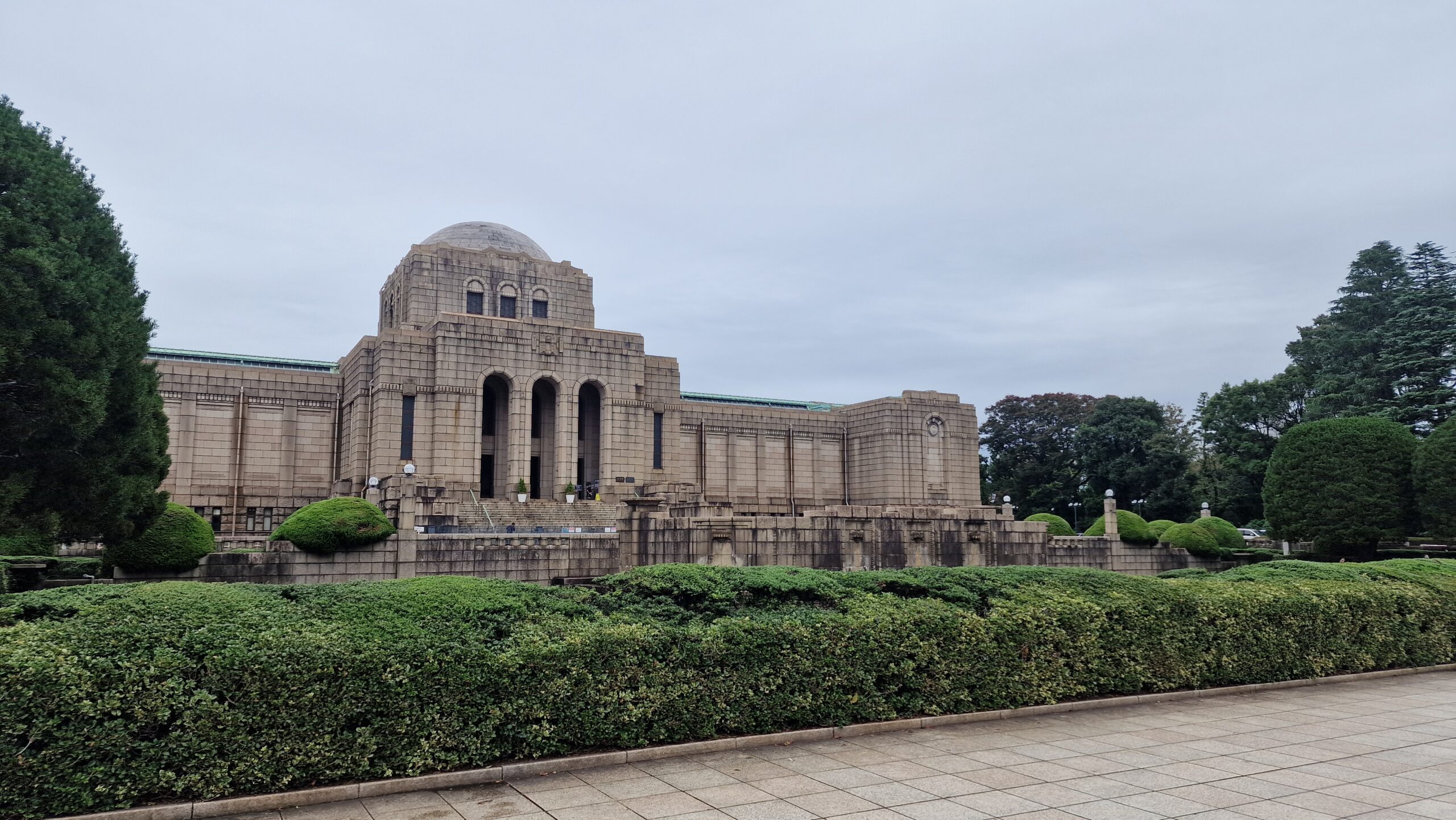
The Meiji Memorial Picture Gallery contains eighty large paintings celebrating the life and legacy of the Meiji emperor and era.
| Tickets | ¥ 500,- |
| Opening hours | From 09:00 to 17:00 Last admission: 16:30 |
| Time needed | 1 hour |
| About the sanctuary (Meiji Jingū) | Denomination: Shinto Enshrined kami: Emperor Meiji, Empress Shōken Festivals: several |
Meiji Memorial Picture Gallery
(聖徳記念絵画館, Seitoku Kinen Kaigakan)
1-1 Kasumigaokamachi
Shinjuku-ku
Tokyo 160-0013
On this page…
On our very first day in Tokyo, we visited the Meiji-jingu. After a magical experience in the forest, we started exploring the outer precincts. As we had seen little repros of the pictures at the temple, now we vaguely knew that we wanted to end up at the picture gallery itself. We encountered a more uncurated version of the city along the way…
At the picture gallery we learned about the life of the Emperor, through the classic Japanese and Western style pictures, in a place that felt like a little time capsule. Much like the Jingu, we had this place to ourselves. It was still early – we even had to wait for the gallery to open – and we visited on a random weekday. The gallery isn’t really on that many Western itineraries, but is a recommendation for everyone who wants to learn more about a key period in Japan’s history.
Similar sights

History of the Meiji Memorial Picture Gallery
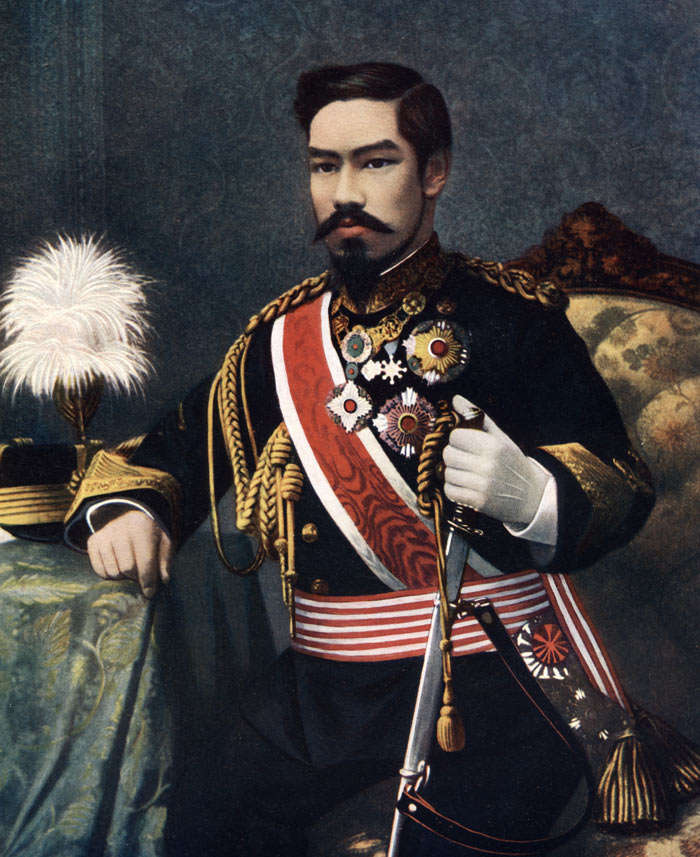
Emperor Meiji was born in Heian-kyō (modern day Kyoto) as prince Mutsuhito, in 1852.
He would become the 122nd emperor of Japan. His reign is marked by the end of the Tokugawa Shogunate, the start of the Meiji Restoration and the Meiji era.
The emperor reigned from 1867 until his death in Tokyo, in 1912.
After the death of the emperor, eighty paintings were commissioned to celebrate his life and legacy. The gallery to house them was built on the Gaien (outer precinct) of the Meiji Jingū. Its doors opened for the first time at the completion of the building in 1926, with only five paintings finished at that time. In 1936 a special completion ceremony was held and a year later the hall finally opened for real and on a full-time basis.
In December 1944 the gallery had to close because of the ongoing Second World War, the effects of which were creeping ever closer to home. Following the US occupation of the country, the US Army requisitioned the Gallery until 1952.
In 2011 the gallery got designated by the Japanese government as an Important Cultural Property.
The 80 pictures
Between 1916 and 1918 a commission drafted a list of 85 possible subjects. Among the five proposed paintings that did not make the cut was a picture on the arrival of Commodore Perry at Uraga. The list was finalised after research in 1921 and approved in 1922. The chosen tableaus are diverse in both topics and locations, as well as poses the emperor is shown in.
The forty ‘Nihonga’

In the wing to the right, the first forty pictures represent the Nihonga, pictures in a Japanese painting style. It uses mineral pigments and sometimes ink, and organic pigments on silk or paper.
The nihonga style paintings include subjects such as the Emperor’s youth, the Restoration, the proclamation of the Imperial Oath, the Imperial Tour through the country, and some military tableaus.
The forty ‘Yōga’
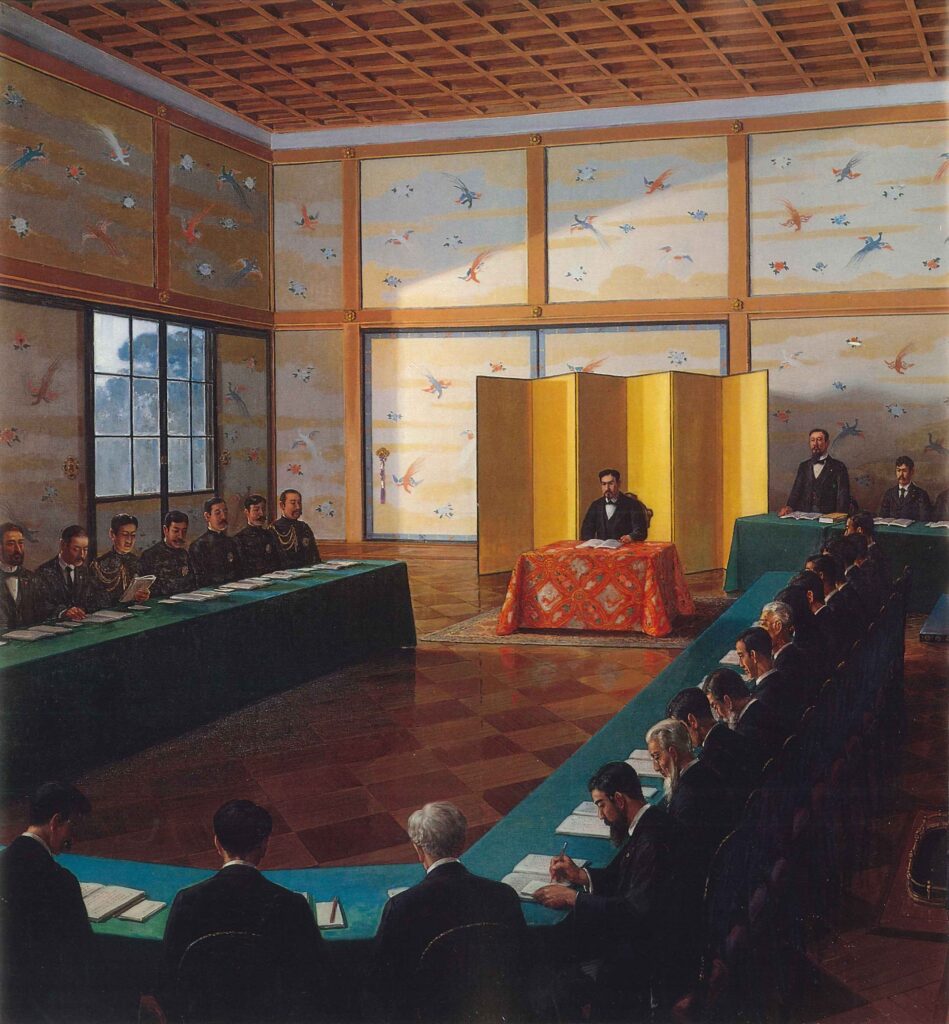
The wing on the left side of the building contains the second series of forty pictures. These are in the yōga or Western style. It depicts Japanese subjects and themes, but employs techniques and materials that are Western in origin.
This part of the collection includes subjects such as the process towards the new constitution, the inauguration of the First Imperial Diet, the Sino-Japanese and Russo-Japanese Wars, and the final illness as well as funeral of the late emperor.