
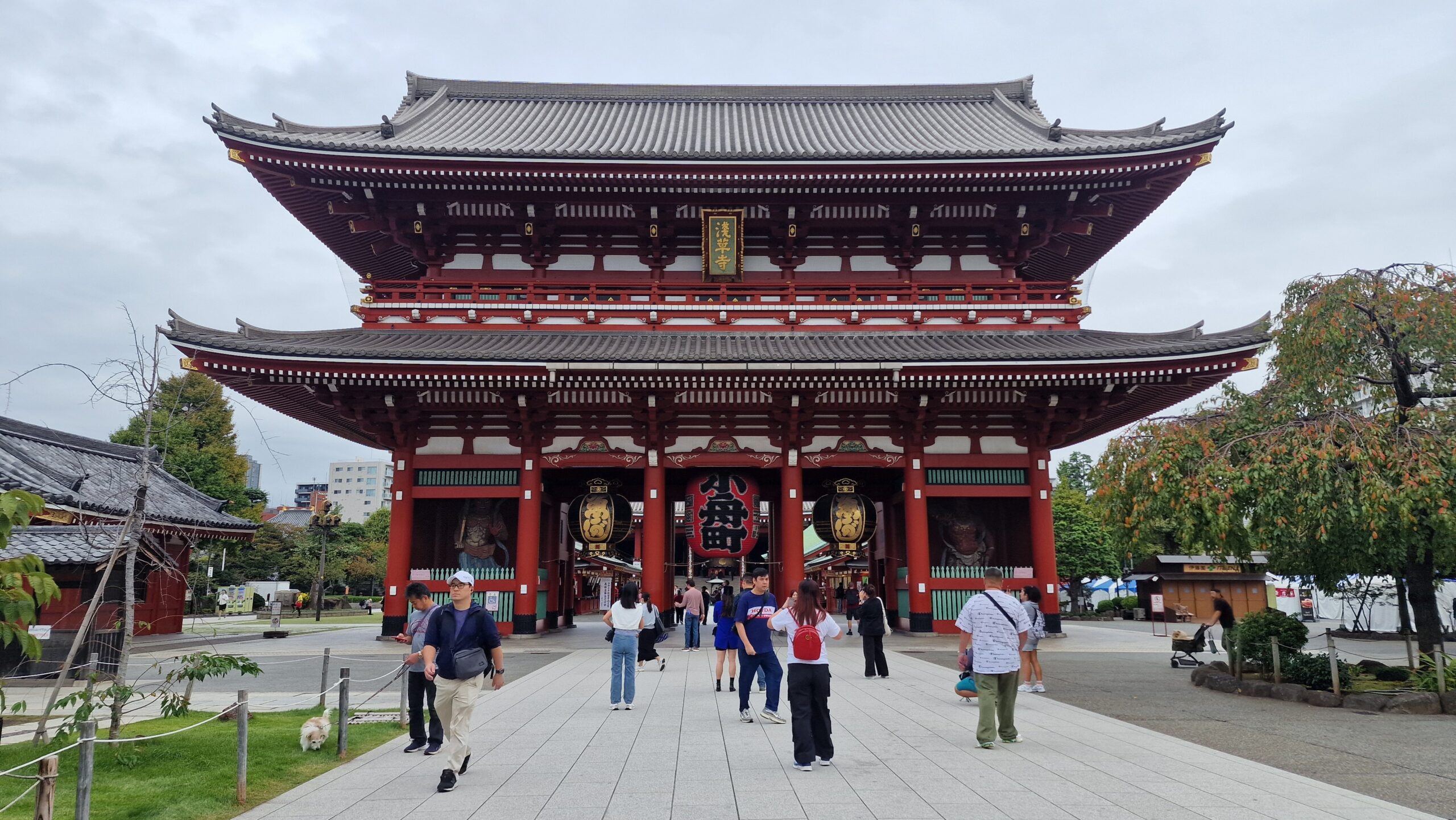
This Buddhist temple of Kannon, in the heart of Asakusa, is said to be the oldest temple in Tokyo. The focal point of worship at Sensō-ji is a hibutsu statue found by fishermen, in the Sumida River in 628 AD.
| 🎫 Tickets | Free |
| 🕐 Opening hours | Grounds: 24/7 Temple: 06:00 – 17:00 |
| ⏱️ Time needed | 1-3 hours |
| ⛩️ About the sanctuary | Denomination: Buddhism – Pure land Dedicated to: Avalokitesvara Bodhisattva (Sho Kanzeon Bosatsu, als known as Kannon) Festivals: several |
Kinryū-zan Sensō-ji (金龍山浅草寺)
2 Chome-3-1
Asakusa, Taito City
Tokyo 111-0032
Temple grounds are open 24/7 but the individual buildings as well as the shopping street, are not.

On this page…
On the second day of our trip, we woke up nice and early. Asakusa was barely starting to wake up when we exited the subway station… We learned the previous day, this is the cheat code when it comes to visiting popular temples.
I was a little anxious, as I felt ill prepared for the visit. Even though I had poured hours and hours of prep work into this trip… That had resulted in me knowing that there was a whole depth here that I did not know off. (It was this experience that would ultimately lead me to start this website.
The uneasy feeling soon made way for excitement. Even though the slats at the shops of Nakamise Dori where still shut, there was a certain hustle in the air, and food stalls nearer to the temple itself were setting up.
Due to all prep work I did, I knew there was more to see than ‘just’ the gates, the pagoda and the head building. So we took a good hour exploring the rest of the temple grounds, enjoying our first real foray into Buddhist temples.
Similar sights
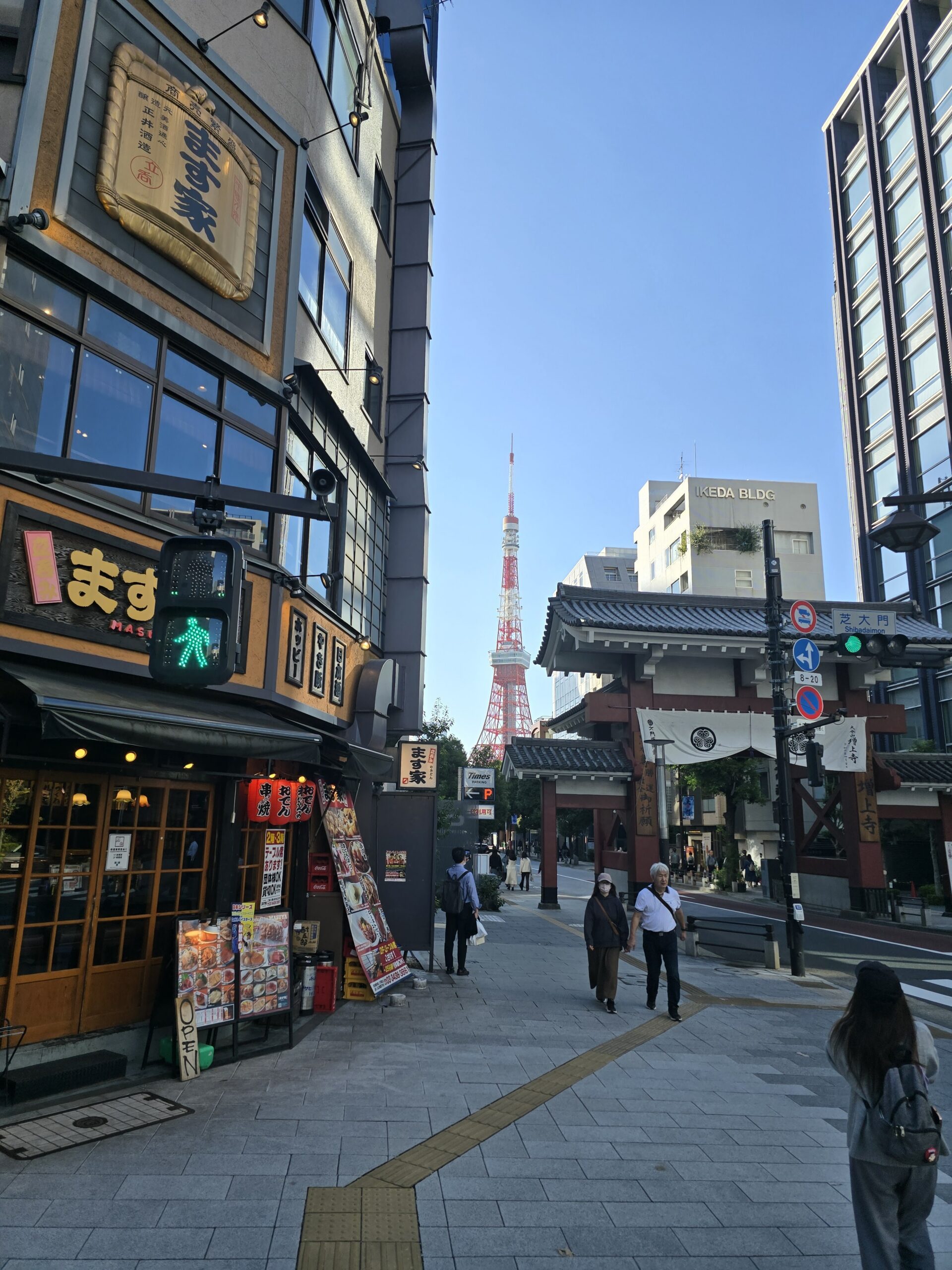
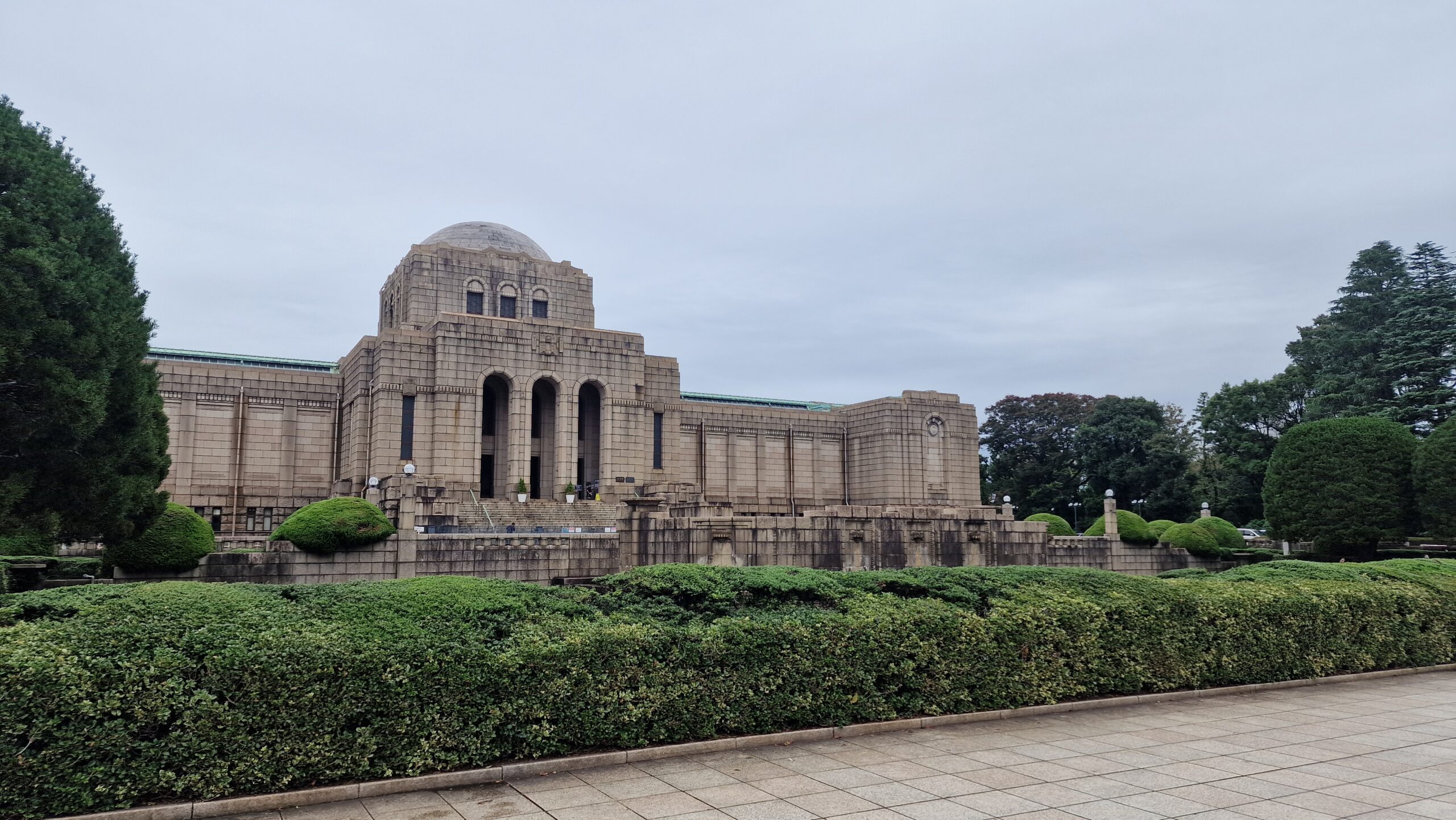

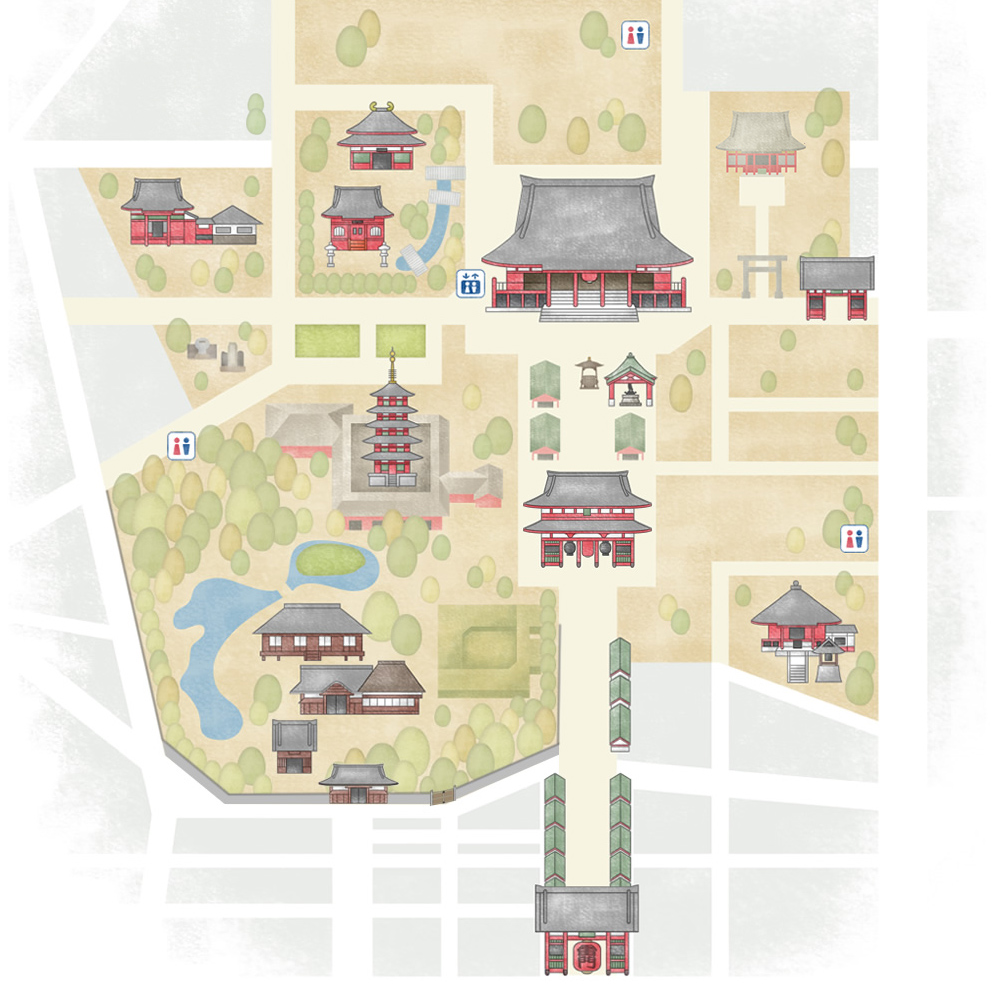
Sensō-ji temple grounds
Kinryū-zan Sensō-ji (金龍山浅草寺), also known as Asakusa Kannon (浅草観音) is Tokyo’s oldest-established temple and one of the most significant. Most tourists enter the grounds via the Kaminari-mon, at the south side of Nakamise-dori. From there they walk to the main hall. Those who have more time, and those who want to go more in depth, also visit the surrounding temple buildings…
- or Fūraijin-mon (gate of Wind and Thunder), after Fūjin-sama and Raijin-sama
- Built originally in 942 by Taira no Kinmasa (平 将門), a local gōzoku and samurai.
- Restored in 1960 by Matsushita Kōnosuke (松下 幸之助), founder of Panasonic
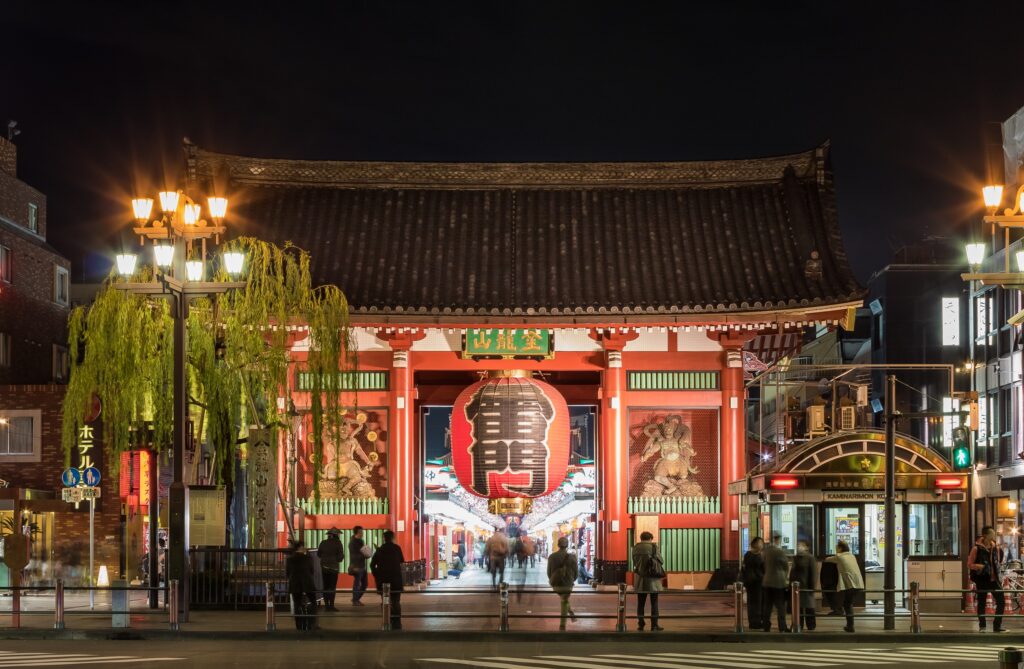
Formally called the Fūraijin-mon, Gate of Wind and Thunder, is the outer of two gates at Sensō-ji. Taira no Kinmasa first erected it in 942 on the boundaries of the temple ground. The current gate, however, dates from 1960. The previous one burned down almost 100 years earlier, after a massive fire in December 1865.
The gate is most famous for the iconic big, red lantern that hangs in its passageway. The oversized lantern, a traditional chōchin, is almost four meters tall and weighs in at approx. 700 kg. (12,7 feet and 1,500 lbs.) The current version is the sixth
The name of the gate refers to Fūjin-sama and Raijin-sama, kami of wind and thunder respectively. They are enshrined in the gate to help protect it. The statues at the front of the gate depict these two powers. A massive fire in 1865 destroyed both the previous gate and most of the statues. However: the heads of the statues survived. Artisans restored both the statues and the gate itself.
In 1978, the temple added two additional statues at the backside of the gate. Master sculptor Denchū Hirakushi, 平櫛田中, carved them to commemorate the 1350th birthday of the first appearance of Kannon at Asakusa. They depict Tenryū, the Heavenly Dragon, and Kinryū, the Gold Dragon. (Some sources also grant these dragons godly status.)
Shinbutsu-shūgō
The Fūjin-sama and Raijin-sama twins are a classic example of Shinbutsu-shūgō (the blending of Shintō and Buddhist beliefs). The oldest record of them is the Kojiki, which chronicles them being born from the Kami Izanami while she was in Yomi, the underworld. Japanese-style Buddhism coopted them to serve as bodyguards for the Buddha and thus you can often find statues of Fūjin-sama and Raijin-sama guarding the entrance to Buddhist temples like Sensō-ji. As Buddhist spirits, they are connected to Vayu and Vajrapani. (Fūjins iconography even has Hellenistic roots.)
The temple shopping street is one of the oldest shopping streets in Japan. It started in the 12th century from a couple of humble stalls, run by local villagers. They received the right to do so as a thank you from the temple priest for helping out with the maintenance. Nowadays, this street offers a variety of street foods, touristy knickknacks and other souvenirs. It runs for ca. 250 meters, from the Kaminari-mon to the Hōzōmon.
Nakamise got an upgrade in 1885 when the local government build brick stalls. The Great Kantō Earthquake largely destroyed them. The Americans subsequently bombed their 1925 replacements at the end of the Second World War.
- The name Hōzōmon (宝蔵門) translates to ‘treasure house gate’
- The gate’s original name was Nio-mon, as it contains statues of two Niō (Deva, Benevolent Kings) guarding the temple.
- Build originally in 942 by Taira no Kinmasa (平 将門), a local gōzoku and samurai.
- Rebuilding by Tokugawa Iemitsu, third shōgun of the Tokugawa dynasty
- Restored in 1964 by Otani Yonetaro (大谷米太郎), sumo wrestler and founder of Otani Heavy Industries and Hotel New Otani
Taira no Kinmasa also built this gate, just like the Kaminari-mon. Records trace it back to 942. Under Tokugawa Iemitsu, the temple received some advanced construction works in 1649. Among the upgrades was a new gate building. The current gate dates from 1964.
Hōzōmon (宝蔵門) translates to ‘treasure house gate’. The structure houses many of the temple’s treasures. These include a copy of the Lotus Sutra and the Issai-kyō, the complete collection of Buddhist scriptures. The Japanese government designated these a Japanese National Treasure and an Important Cultural Property respectively. (Nijūmon means it is a two storied gate, as opposed to rōmon which do not have multiple stories.)
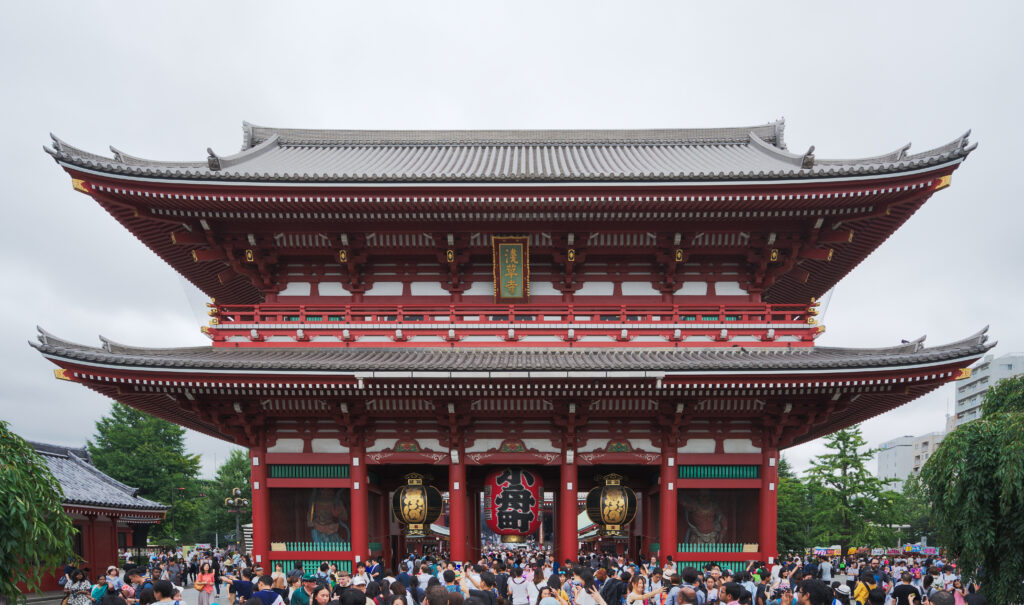
Many still know the gate under the earlier name of Niō-mon. Niō-mon are widely found in Buddhist temples in Japan, China and Korea. Niō are Benevolent Kings or Deva. Not only the Hōzōmon, but the Kaminarimon too can be classified as such.
Besides the two Niō, the gate also features three large lanterns and giant-sized waraji (straw sandals).
Kannon-dō is the main hall of the temple complex. The original hall was built by Tokugawa Iemitsu in 1649. The Japanese government designated it a National Treasure. After its destruction in the Great Tokyo Air Raid, it was rebuilt in 1958 with donations from all over Japan. The main treasure of the temple, the principal image of Kannon, sits in a miniature temple in the middle of the naijin (the inner sanctum).
Taira no Kinmasa first commissioned the Five-storied Pagoda in 942. Tokugawa Iemitsu later rebuilt it. As the Great Tokyo Air Raid leveled the structure, the current version dates back to 1973. The top floor stores Busshari (ashes of the Buddha), which Isurumuniya, the royal temple of Sri Lanka, donated to Sensō-Ji.
The Yogō-dō (1994) serves as Goshuin-jo, where you can get stamps from the temples Scarlet Seal. The hall enshrines eight Yogō, followers of Kannon’s teachings. Each of these deities protects one or two animals from the Chinese zodiac.
Awashima-dō was built to enshrine Awashima Myojin in the Genroku period (1688-1704). It served as a temporary main hall after the Second World War. The building moved to its current location in 1994.
Denbo-in (浅草寺伝法院) and its garden are a National Scenic Beauty Site. These grounds contain a guest house, a library and study rooms, aswell as the Oima of the head priest. While the gardens generally remain closed for the public, the temple opens them yearly, for a brief period in spring.
Niten-mon (二天門, Gate of the two Ten, Buddhist deities) is an official Important Cultural Property. It originally functioned as the gate of the Tosho-gu shrine. Unlike other structures on the grounds, the current Niten-mon dates back directly to 1649. The Ten that guard the gate are Zochoten and Jikokuten.
Benten-dō honours Benzaiten (Benten, Sarasvati), one of the Seven Lucky Gods. The hall enshrines a statue known as Rojo Benzaiten, which depicts the deity as an elderly woman. It ranks as one of the three most prominent Benten statues in the Kantō region. The bell used at this hall is known as the time bell.
A cloud of flowers,
Is that bell from Ueno
Or Asakusa?~ Matsuo Basho
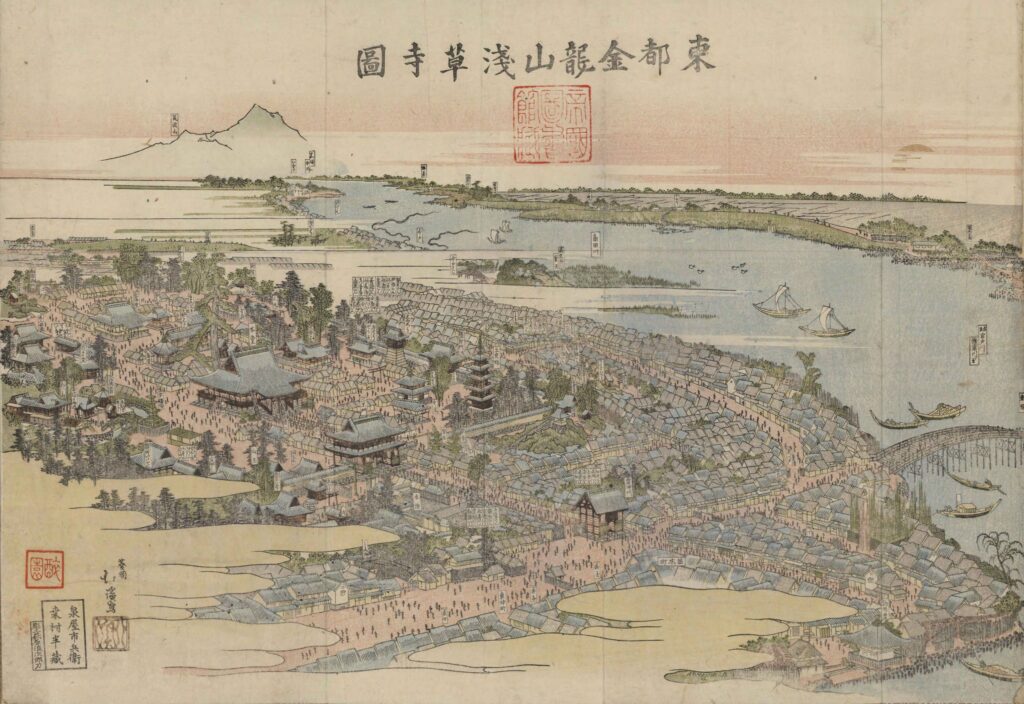
History of Sensō-Ji
About a statue in a river…
Sensō-ji, or Asakusa Kannon, is the oldest temple in Tokyo. According to tradition it dates back to 645, but the story of how it came to be dates back to the 18th of March, 628.
That day two fishermen, the Hinokuma brothers, set out to catch some fish on the Sumida River. When they reeled in their nets, they found a strange statue to be caught in them.
Befuddled, they showed it to their village elder, Haji No Nakatomo, who promptly recognised the image of Kannon. He took the appearance of the statue as a sign and devoted his life from that point on to Buddhism.
The statue was kept at his house, that got converted to a temple.
In 645 a priest named Shokai visited the temple, and he built a hall for Kannon. Inspired by visions, he decided to hide the statue from view (hibutsu). Ever since, the statue is always veiled.
The small fishing village of Asakusa grew over the years, due to people coming to the village to worship the Kannon. In 857, third Zasu of the Tendai school of Buddhism, Ennin or Jikaku Daishi, visited the temple and had a maedachi made. This copy of the statue could be shown to the public, instead of the veiled original.
The busho (military commander/warlord) Taira no Kinmasa became governor of the region in 942. He renovated the temple complex and added both the Kaminarimon and the Niōmon (now: Hōzōmon) gates.
However: the first document that mentions the temple, only dates back to 1181. The Azuma Kagami chronicles about how Tsurugaoka Hachimangū, a temple, was being build in Kamakura and carpenters from Asakusa were called in. Monks from the temple were present at memorial services at Shōchōjū-in in Kamakura (1192). And a visit to the temple is described in the great literary work Towazugatari (1290).
Growing influence
During the shogunate of the Kamakura era, the temple grew in influence and importance. And in 1590, right before the start of the Edo period, Tokugawa Ieyasu designated Sensō-ji as the temple where the shogunate offered prayers. At this occasion, the temple received 500 koku of land (1 koku of land is the area for the production of 1 koku of rice, the amount needed to feed one person for one year).
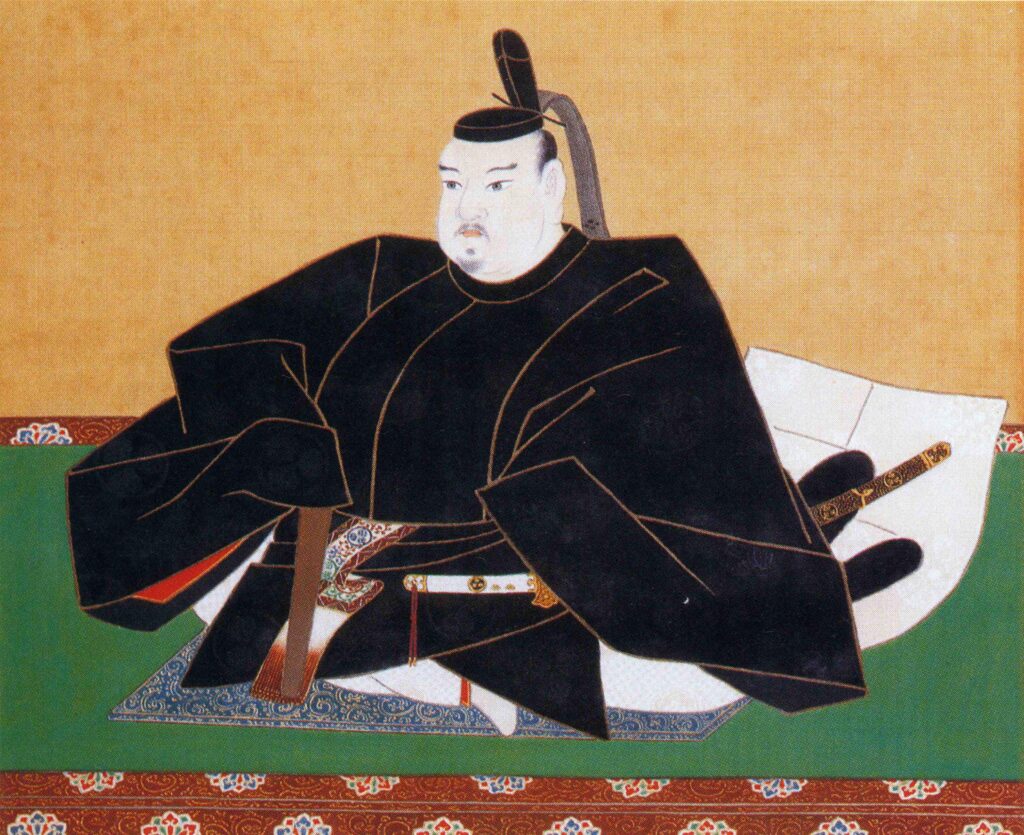
Shortly after, the temple burned down twice (in 1631 and 1642). Tokugawa Iemitsu, assisted in the rebuilding of the five-story pagoda and the main hall. And in 1685 the first shops appeared on the temple approach, the current Nakamise. They were run by locals who helped clean the temple and the temple grounds who received this permission as a way of thanking them.
Throughout the years, as with many major temple areas, Asakusa developed an entertainment district. In the middle of the Edo period, street performers found their way to the temple. And at the very end of the Edo period, three theatres moved to the area (1843-44) and the Hanayashiki theme park (1853) was built. After the Restoration, the area kept its appeal. Due to reforms, they converted much of the temple grounds into Asakusa Park. in 1890 a Twelve-Story Tower, Ryōunkaku, was built on the site. It was a large commercial building.
The Great Kanto Earthquake (1 September 1923)
When the Great Kanto Earthquake struck around noon on the first of September 1923, many people were cooking their lunch. This coincidence made the earthquake hit the city of Tokyo extra hard: the brunt of the casualties are people who lost their lives in the many fires that razed the city to the ground. At the time they counted at least 130 major fires and a firestorm even broke out. Asakusa was a district with a dense population, and the heavy fires razed much of the buildings to the ground. To worsen the blow, rescue workers could not reach the district until a few days after the first quake.
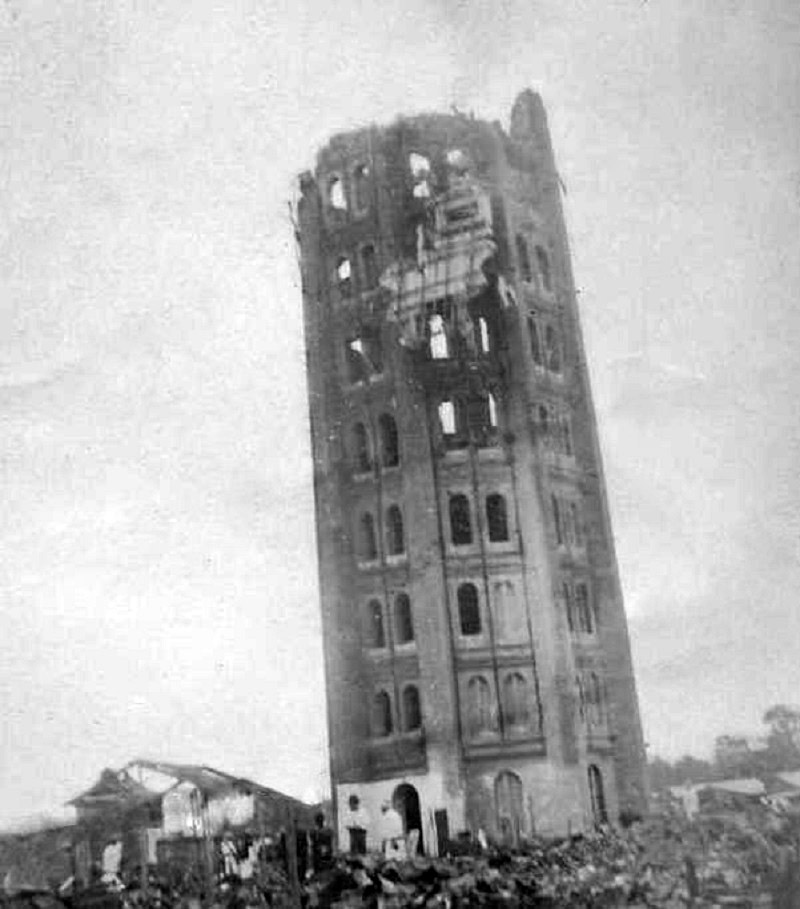
At the time, some interpreted the disaster as a divine punishment for the loose morals and the lavish lifestyle of some contemporaries. The fact that entertainment districts suffered extraordinarily hard, served as proof. In Asakusa, the twelve-story Ryōunkaku tower housing a department store all but burned to a crisp. The symbolic message could not speak any louder, to the people believing in the punishment.
Like the surroundings, Sensō-ji too suffered from the fires. However: a bucket brigade led by a local construction master limited the damage to a few buildings. Some structures however, did get destroyed. And even though they were eventually rebuild, much of the restorations got lost again in the Great Tokyo Air Raid of 1945.
The Great Tokyo Air Raid (10 March 1945)
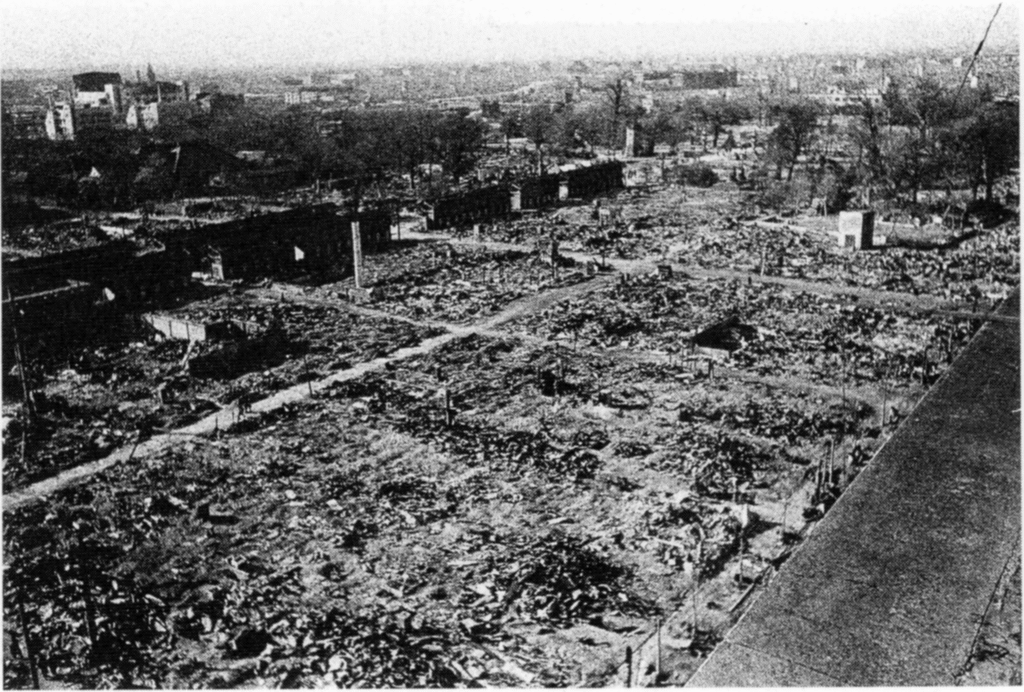
The recently rebuild area suffered again towards the end of the Second World War, in 1945. This time it burned from the incendiary bombs dropped during the Great Tokyo Air Raid. The attack on the tenth of March 1945 specifically targeted the area around the Sumida River, including Asakusa.
Even most of the buildings spared by the fires that broke out after the earthquakes, got razed to the ground. Thousands of people who sought safety from the fires at the site of the temple, died in the attacks.
Among the completely destroyed buildings were Kannon-do and the five-storied pagoda, as well as the recently rebuild Nakamise-dōri and both gates at the end of the shopping street.
A memorial for the air raids stands within the temple grounds.
Rebuilding (1950’s & 1960’s)
After more practical restoration works finished, the people of Tokyo turned their attention to their cultural treasures: their temples, their shrines, theatres, monuments,… In the Fifties, during the first restorations, they rebuild Kannondo, with a new titanium tiled roof. Next were the gates (1960, 1964) and finally a new pagoda arose (1973).
After the war, the entertainment district around the temple suffered. More options were available and other districts formed serious competition. However: the local shopping district regained its position. Hoppy Dori(1940’s) and Asakusa Engei Hall (1964) are a few of the attractions that date back to the period.
In current day Tokyo, the Sensō-ji remains a cultural center, attracting millions of pilgrims and tourists year on year. In 2012 a great viewing point of the temple and the shopping street opened up, right across the street: the Asakusa Culture Tourist Information Center. The observation deck on the eight floor is freely accessible.
(And as a little bonus for those collecting eki stamps: don’t forget to visit the second floor, while you are at it!)