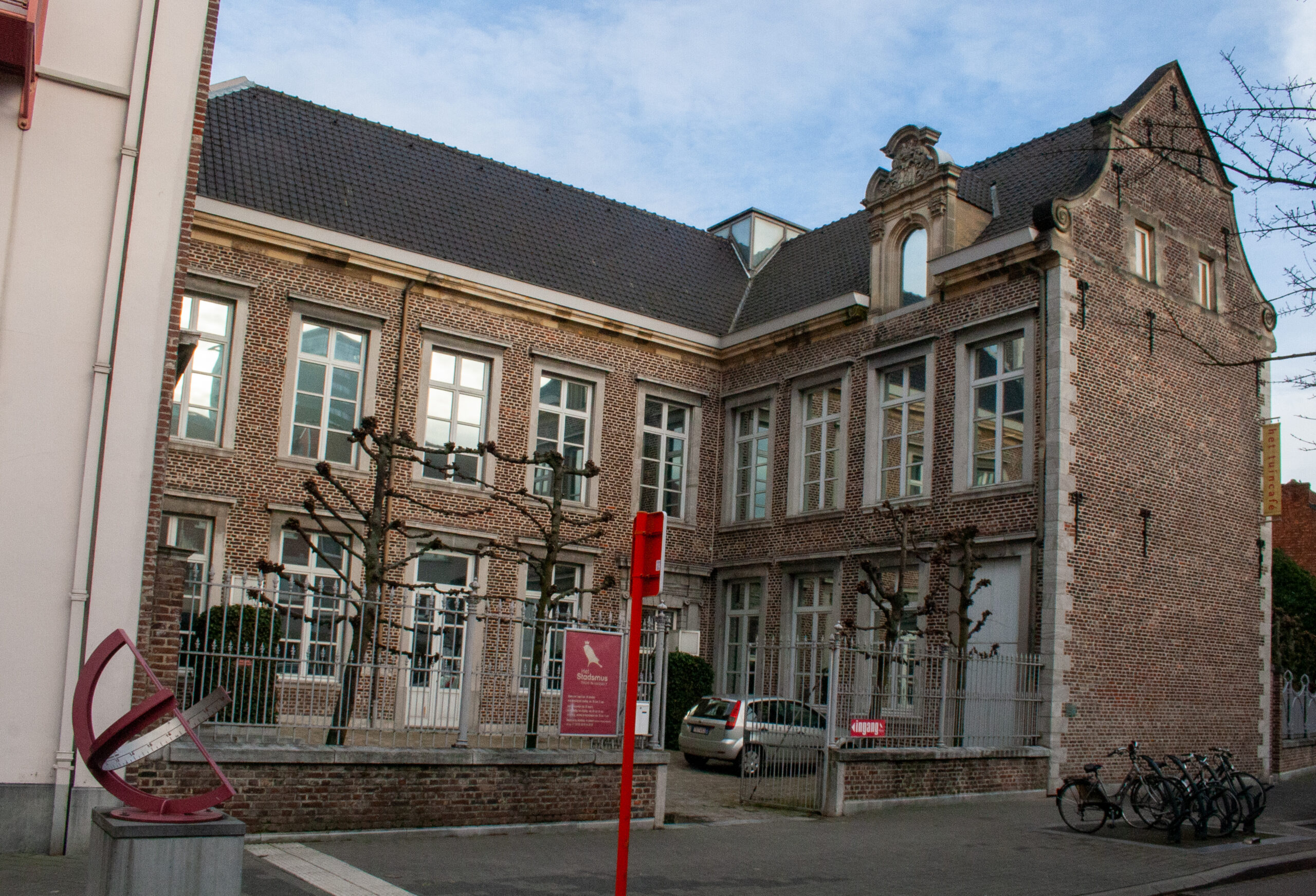
The small Stadsmus city museum tells the history of Hasselt through local artefacts. It has a few interesting sub-collections on ceramics and present day arts.
| 🎫 Tickets | Free entrance for main exposition |
| 🕐 Opening hours | 11:00 – 17:00 (Nov-Mar: 13:00-17:00 on weekends) Closed on Mondays, on certain holidays and the largest part of January |
| ⏱️ Time needed | 90 minutes |
| 📚 What to visit? | Religious treasures, including the Herkenrode monstrance (the oldest in the world) and stained glass windows; as well as dresses for the local statue of the Mother Mary, the Virga Jesse Heritage items from local associations, such as the compendium of plays, ‘Register Coemans’ Historic collections of ceramics and silverware from local factories and craftspeople |
Het Stadsmus
Guido Gezellestraat 2
3500 Hasselt
Discover the collections! / Join an event!
Be advised that many online sources are not properly available in English.
On this page…
This museum got an overhaul back in 2004 and is getting ready to receive its next update. For the moment it is a nice collection of the little stories that make up the bigger story, although I find that a more macro lens is sometimes a bit lacking.
The museum often hosts special exhibitions in relevant histories of current events and affairs. Those are more geared to a local audience, but they offer a unique insight into the city you won’t find anywhere else.
Similar sights
Stadsmus & collection
Main collection
The Stadsmus city museum houses several collections through which it tells the history of Hasselt and the little histories of its inhabitants. Main parts of the collection include:
- Religious treasures from local churches, abbeys and cloisters.
- Silverwork by local artisans from as early as the 15th century.
- Locally produced ceramics (1895-1954). The factory of ‘Manufacture de Céramiques Décoratives de Hasselt‘ was located in the city centre (on the location of the present-day library). It had an international reputation.
- Local art from the 19-20th century.
- Heritage pieces connected to the local community and its many associations.
Flemish heritage pieces
The museum currently holds four top pieces recognised as important Flemish heritage.
- From the Virga Jesse Basilica: ‘Kleedje van de Morin’, a set of embroidered, silvered and gilded clothes for the Christ in the arms of the Virga Jesse statue.
- From the St. Quintinus Cathedral: the Herkenrode Monstrance, the oldest known monstrance in the world, commissioned in Paris by Aleidis of Diest, abbess of the Herkenrode Abbey (1286).
- From the Roode Roos, a chamber of rhetoric: the Register Coemans, a bundle of 14 plays
- From Herkenrode Abbey: glass stained windows (You can visit other parts of the set in England. Specifically in Lichfield, Shrewsbury, and Ashtead)
Building
The museum is located in the historic houses ‘Stellingwerff-Waerdenhof’.
Waerdenhof is a patrician house that got its first mention in 1451. It was used as winter quarters for the Lords of Mombeek, standard bearer for the Counts of Loon. In the 17th century, it was bought by alderman Jan Renier de Geloes, who started with major renovations (and would later go on to become mayor of the city). It passed through several families until the widow of owner Peter Jacobs remarried with Guillaume Stellingwerff in the 19th century. Peter Jacobs had the northern wing of the building knocked down and replaced it with a grand bourgeois residence. Thus the palazzo on the Maastrichterstraat and the Waerdenhof became a single complex.
The City of Hasselt became owner of the building and restored it to house the local peace court as well as the city library and archives. It later would become the city museum. First under the name ‘Stedelijk Museum Stellingwerff-Waerdenhof’ and since 2005 as ‘Stadsmus’, a play on words between the name of a bird; the nickname for city dweller; and the Dutch word for city museum.