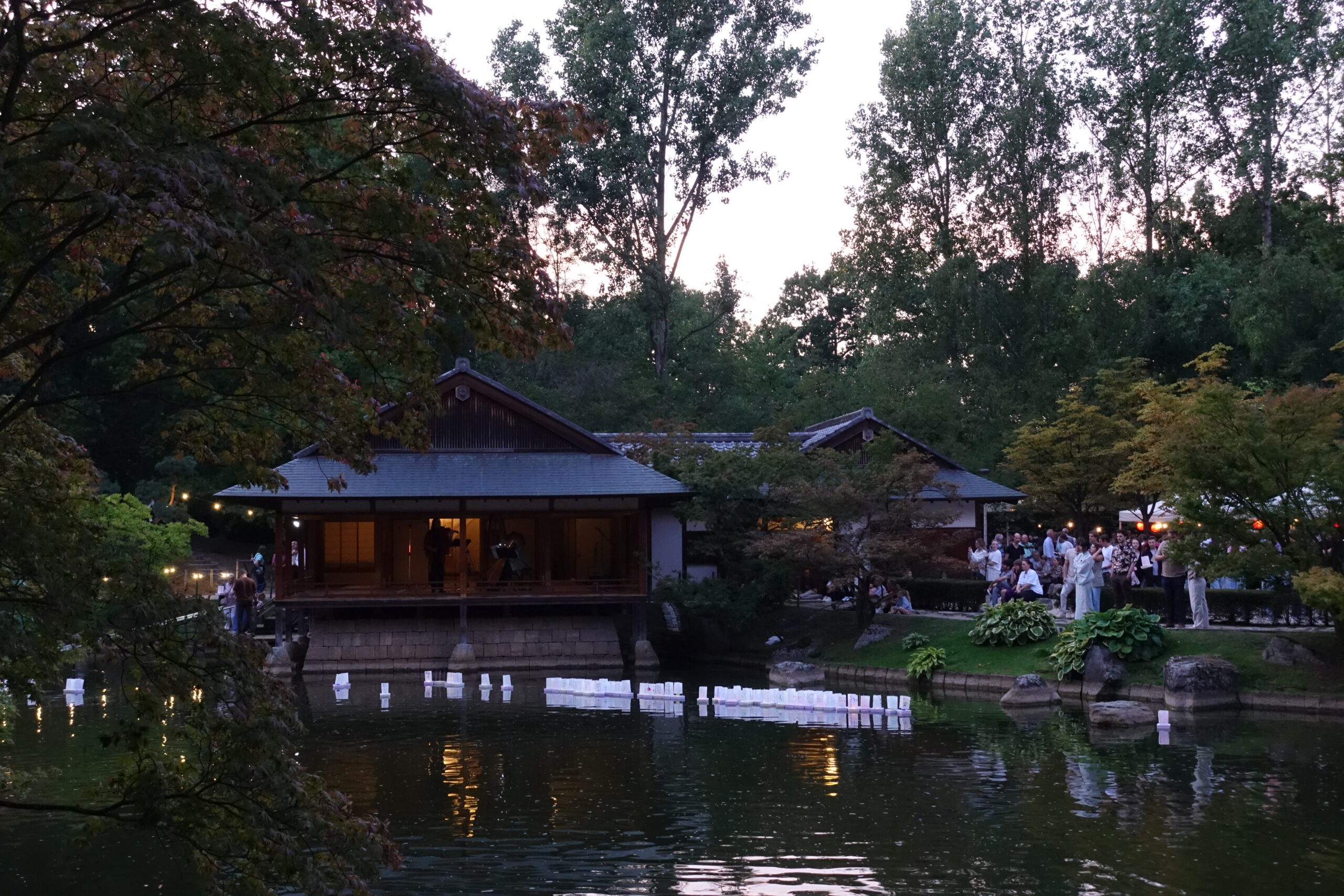
This is the largest authentic Japanese Garden in Europe! It was a gift from the people of Itami (JAP) to the people of Hasselt (BE), to celebrate the twin town agreement. It was designed by Takayuki Inoue and spans an area of approximately 2.5 hectare.
| 🎫 Tickets | € 7,- |
| 🕐 Opening hours | Tue – Sun, from 10:00 to 17:00 Closed in winter (Nov. – Feb.) |
| ⏱️ Time needed | 1 – 2 hours |
| 📚 What to visit? | Highlights are the ceremonial house ‘Kōrokan’, the tea house ‘Jyushoan’, a Peace Bell, the yatsuhashi (zig-zag bridge) and the Ryūmon-no-Taki (Dragon Gate Waterfall). |
Japanese Garden
Gouverneur Verwilghensingel 15
3500 Hasselt (Belgium)
Please be advised that prebooking is required for certain festivals, and recommended during certain seasons.
On this page…
To me, this garden always has something ethereal. Stepping through the gates, onto the path towards the pond, it is as if you enter a whole new place. Gone are the busy roads surrounding the garden. Gone is the very Western style park next door. Suddenly there are new plants and blossoms, foreign buildings and customs that feel like they belong in a different world altogether.
In all honesty: I was amazed when I learned this is the largest authentic Japanese garden in the whole of Europe. It is not overly big, and I would guess an hour would suffice to see most all of it. Half an hour extra if you want to enjoy the peaceful atmosphere for a bit longer.
Similar sights
Garden history
Foundation
On the fifth of April 1985 the Belgian city of Hasselt and the Japanese city of Itami became twinned cities. Five years later, to celebrate this bond, the cities decided to exchange gifts in 1990. Hasselt offered the city of Itami a carillon with 43 bronze bells. And in return, the city of Itami gifted Hasselt with something special: the biggest Japanese garden in Europe. Japanese architect Inoue Takayuki designed the gardens.
The garden was to be built in an empty plot of land of ca. 2.5 hectares next to a local park. The building and landscaping works took 250 working days. The official opening took place on the 20th of November 1992. But as a Japanese garden gets better with age, gardeners needed to nurture the plants for at least 20 to 25 years before visitors could enjoy the park in its true form!
Growth and maintenance
In 2010, the garden added a jinja (Shintō shrine). The builders modelled after a small shrine in Shukkei-en Garden (Hiroshima). It is the first Shintō shrine in Belgium. In 2016, to celebrate 150 years of diplomatic relations between Japan and Belgium, the Peace Bell was installed beside the shrine. Visitors ring the bell to promote peace and commemorate the victims of the Hiroshima and Nagasaki nuclear bombings.
Currently, works are on the way to also add a Buddhist temple. It will be dedicated to Jizō Bosatsu (Kṣitigarbha). This Bodhisattva is popular in Japan. Buddhists revere him as protector of those who travel, women in childbirth and children, especially deceased ones, and unborn souls.
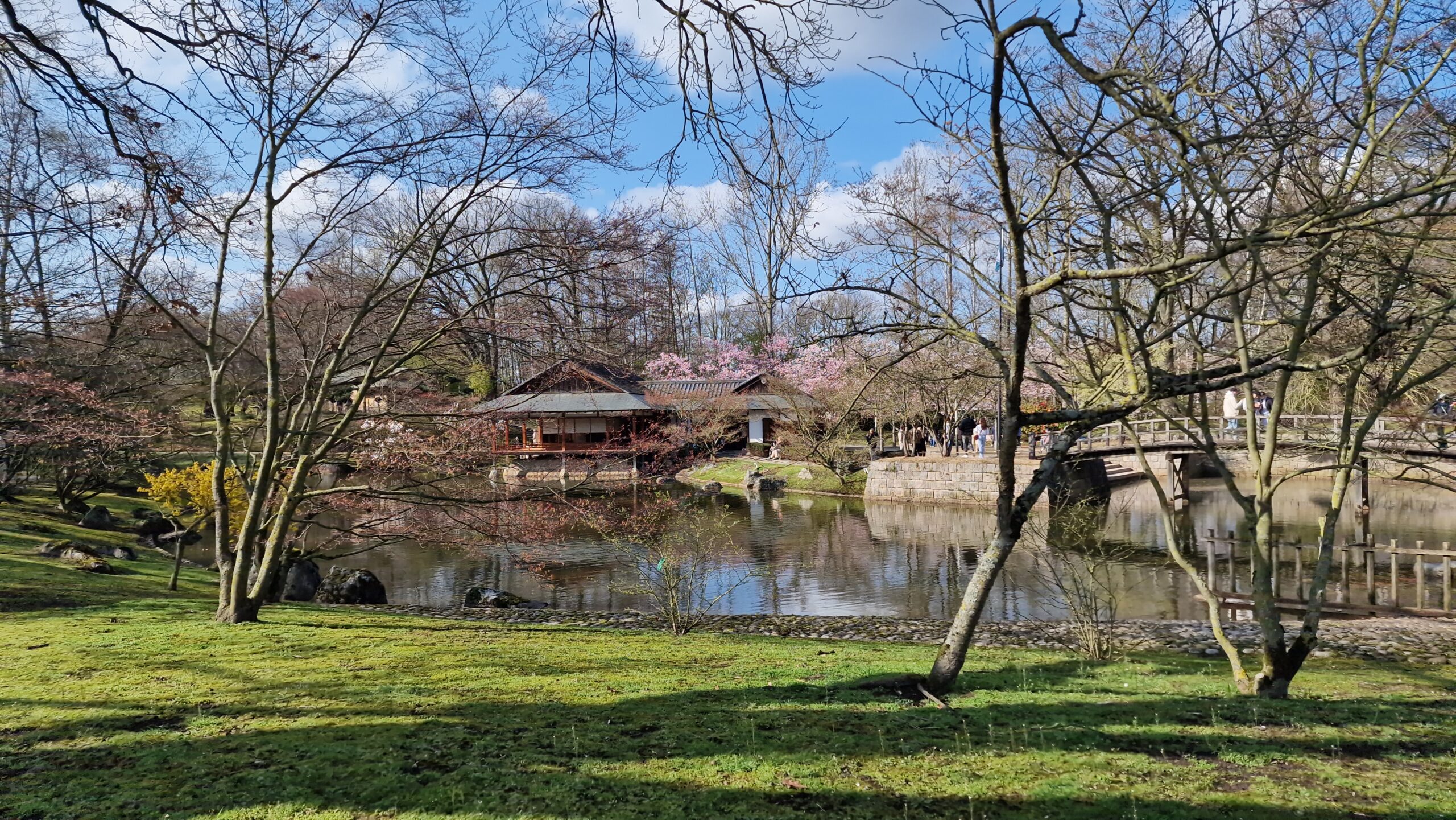
A walk around the garden…
At the entrance
- Torii at the parking lot
- The entrance area
European side
…
Transition
…
Japanese side
…
Guided walk
The garden consists of three parts, gradually evolving from a European to a Japanese park. The main attractions along the path through the park are:
- the Yatsuhashi (zig-zag bridge) and Dragon Gate, near the water;
- the Peace Bell and a Shintō shrine (with a Buddhist temple in construction);
- the Kōrokan ceremonial house;
- the Jyushoan tea house and Yukimi-doro;
- the Azumaya summer pavilion.
Looking for the official walking guide and map? You can find them on the gardens website. You can also request a guided group visit (at least 14 days in advance). These tours are available in Dutch, English, French and German.